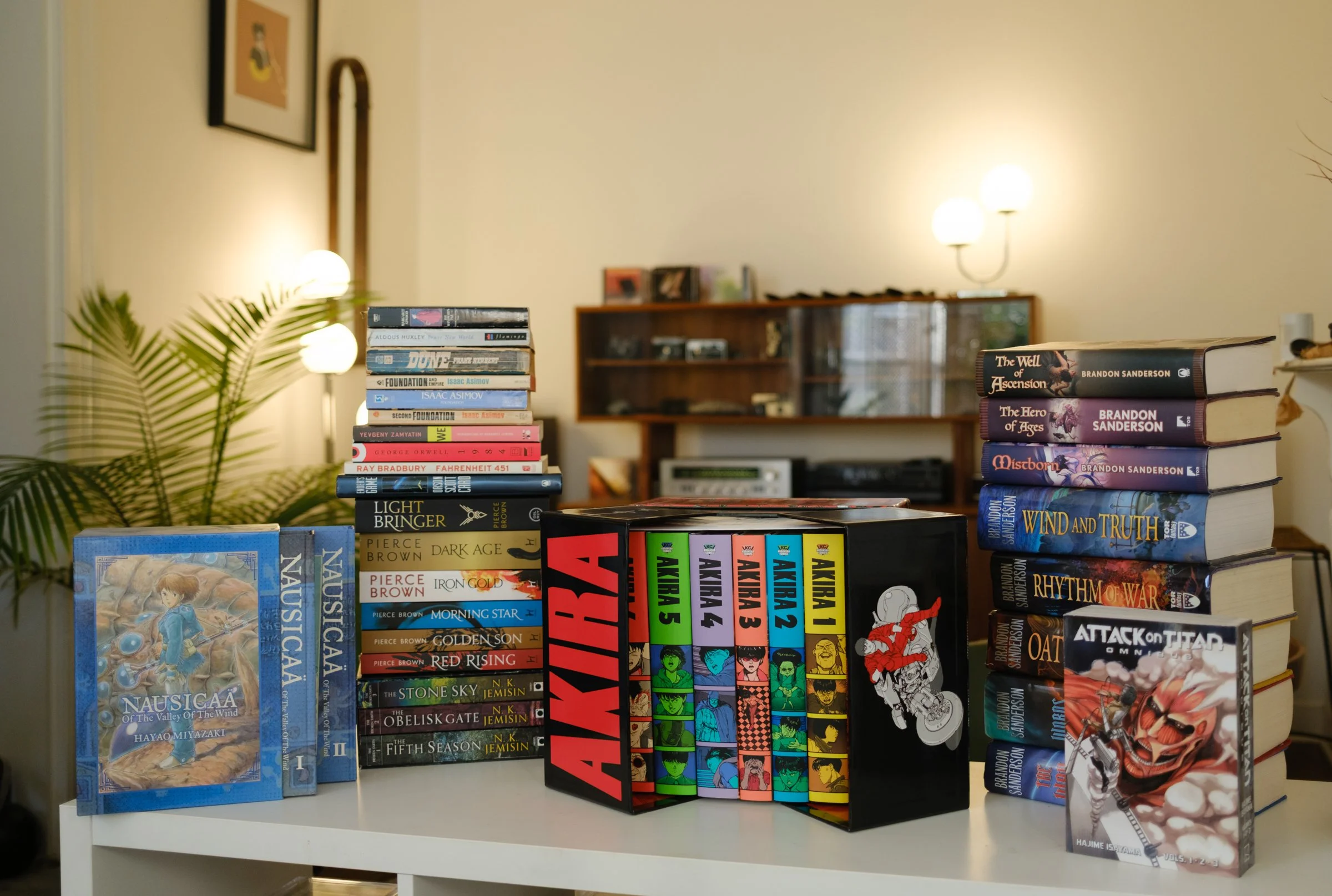
Linden Analog Library — Welcome
I did not come to these books through theory.
I came to them through violence—
captured as it unfolded in real time,
frame by frame.
As a military combat photographer and videographer—Combat Camera, COMCAM—I learned about power from a distance:
through a lens capturing moments, through screens selecting, editing and reliving those moments, and later, as I moved into leadership, from tactical command centers—
several layers removed from consequence.
I’ve been close enough to know how death smells and tastes,
and far enough to see how easily action becomes procedure—
how responsibility thins as it moves up the chain.
This library is being assembled at a moment when state violence is not theoretical, not historical, and not hidden. Images circulate faster than accountability. Official language arrives already prepared. What becomes most ordinary is not the act itself, but how quickly it is explained, filed, and processed as procedure.
I recognize that rhythm,
I see how a nation’s story gets revised—
digital archives altered,
books banned,
museums curated,
truth rendered provisional,
history made negotiable.
Growing up, I was not well educated.
I struggled in school.
I skipped most assigned reading.
Books were never presented as alive—
as adventures worth taking.
The books in this library were not assigned to me.
They were discovered.
I kept them because they helped me understand things I had already lived but could not yet articulate.
This library is shaped by that vantage point: ground level and overhead, action and aftermath, belief and bureaucracy.
The works here are not predictions or provocations.
They are tools for seeing—
ways of recognizing how systems organize behavior,
how violence becomes abstract,
how order learns to speak.
This essay engages directly with books and films referenced throughout the library. Their ideas and structural choices are discussed rather than plot. Some narrative elements appear in service of analysis, but nothing here is intended to spoil the experience—only to sharpen it. Every work included is here because it is worth reading or watching in full.
I could have chosen others. These stories are simply the ones that have stayed with me — read within the last several years, still fresh on the mind and still working on me beyond entertainment.
I like stories.
There are many ways to tell them.
Some writers polish every sentence.
Some strip language to its bones.
Some authors obscure.
Others repeat until the message is impossible to ignore.
Which is to say: there will be overlap below.
Repetition.
Recurring ideas.
Libraries do this.
They circle back.
They let patterns emerge.
There was a saying growing up:
toss a frog in a boiling pot and it’d jump out
place a frog in a pot and turn the heat up
frog doesn’t know its boiling until its too late
These books are not answers. They are mirrors— polished slowly, until familiar shapes come into focus.
They helped me recognize myself in the systems around me. They did not accuse. They reflected.
That is what this library offers.
You are welcome here.
What follows is not a comprehensive theory, and it is not neutral. It is the result of reading with a particular set of experiences in mind—watching how power behaves when no one thinks they are being watched, and how systems explain themselves once harm becomes routine.
This is the lens I bring to these shelves.
How I Read These Books
Speculative fiction does not predict the future.
It teaches pattern recognition.
It shows how systems fail slowly, invisibly, and often legally.
The failure is not that we struggle to imagine dystopia.
The failure is that we imagine it too narrowly—
reducing fascism to a costume drama. Uniforms. Salutes. A single villain. A dramatic rupture from normal life.
Real fascism is quieter. It slips in. It dresses as order, efficiency, protection. It rewards compliance, punishes fatigue, and renders cruelty inevitable.
History does not offer a single account, but many—shaped by bias, revision, and forgetting.
Germany in the early twentieth century did not wake up as a totalitarian state. It slid incrementally, bureaucratically, and often legally. Democracy did not collapse under a single siege. It hollowed out under strain, fear, and exhaustion. Fascism arrived not as chaos, but as a promise of order.
And the lesson is not confined to the past.
These structures reappear wherever authority is insulated from accountability: emergency powers that never expire, surveillance justified by catastrophe, bureaucracies that reward obedience over justice, aesthetics that signal competence rather than responsibility.
Advertising agencies understand this. So do extremist movements and state institutions alike. Tactical aesthetics—armor, uniforms, militarized posture—are often less about protection than signaling.
Body armor for spectacle.
Performative violence designed to provoke reaction, then cite that reaction as justification for escalation.
Small procedural choices—delayed accountability, normalized cruelty, erasure of inconvenient truths—accumulate into systems that resemble history’s darkest chapters.
That is where speculative fiction becomes indispensable—
not as allegory,
but as documentation in advance.
Speculative fiction recognizes these patterns early because it follows incentives before outcomes, tracing how power organizes behavior long before it announces itself as doctrine.
What We Mean When We Say “Fascism”
Fascism is one of the most misused terms in contemporary language. It is treated as insult, dismissed as alarmism, or flattened into symbolism before it can serve as analysis. In the American context especially, the word often collapses under partisan gravity before it can do any analytic work.
So it must be defined.
For the purposes of this library, fascism is not:
A specific uniform or symbol
A single authoritarian leader
A fixed position on a left–right political spectrum
Fascism is better understood as a mode of organizing society under sustained conditions of fear.
At its core, fascism is a political and cultural process marked by recurring traits:
Mythic National Identity
The nation becomes a sacred story rather than a complex reality. A mythologized past is invoked to justify present cruelty.
The Erosion of Objective Truth
Facts become negotiable. Loyalty replaces evidence. Narrative replaces reality.
The Creation of Internal Enemies
Social and economic failures are displaced onto identifiable groups—portrayed as both weak and existentially dangerous.
The Fusion of Power and Spectacle
Authority is communicated visually. Aesthetics do not merely decorate power—they perform legitimacy.
Legalism Without Justice
Fascism prefers policy to mobs. Violence is reframed as administration.
The Demand for Simplicity
Complexity becomes suspect. Moral nuance collapses into binaries.
The Normalization of Cruelty
Atrocities arrive as solutions, phased in gradually, each one easier than the last.
Fascism rarely announces itself.
It arrives as restoration.
As efficiency.
As common sense.
This is why speculative fiction recognizes it early - before the hierarchy solidifies, before the language calcifies, before the system admits what it is.
Where These Warnings Come From
Before fascism had flags, speculative fiction had systems.
What follows is not a prediction, but a record of recognition.
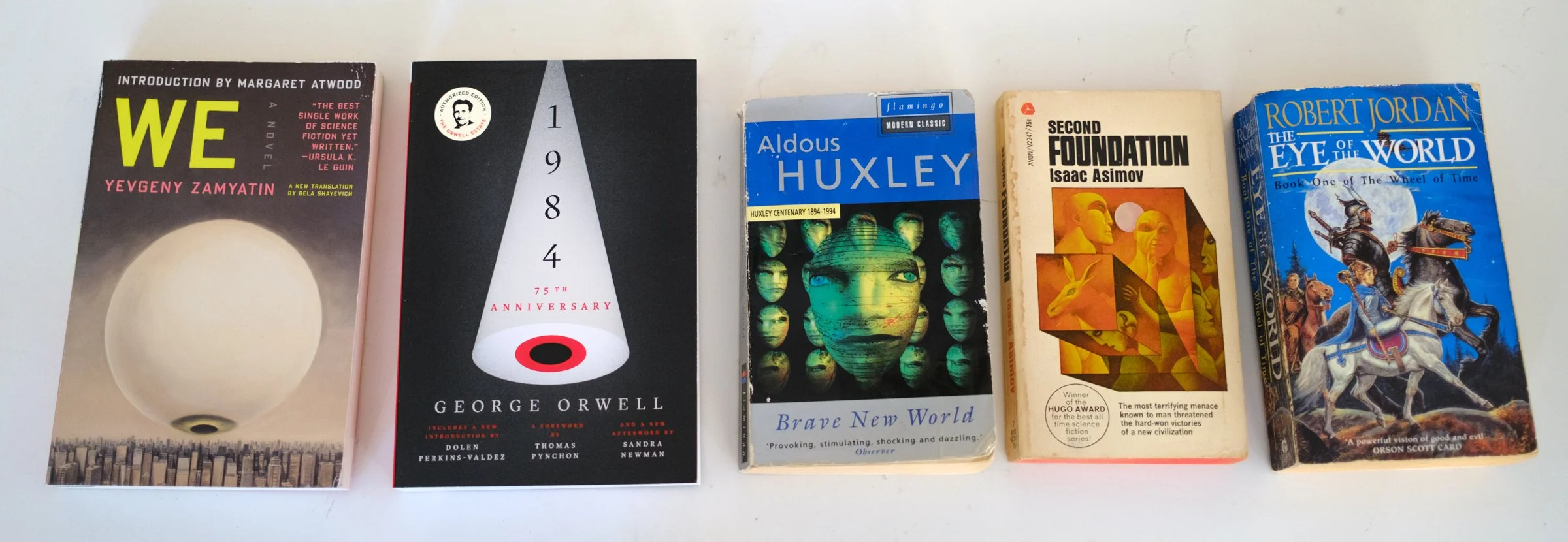
Fascism did not always have a name. The term—derived from the Italian fascio, meaning “bundle”—was formalized in 1919, when Benito Mussolini founded the Fasci Italiani di Combattimento. But the system it describes existed before its christening. Yevgeny Zamyatin’s We (1924) recognized the architecture early: totalitarianism does not require hatred; it thrives on optimization. Citizens become numbers. Privacy becomes inefficiency. Surveillance becomes care. We depicts tyranny not as rage, but as administration—an early blueprint for power that erases humanity through reason rather than cruelty.
1984 (George Orwell, 1949) was not prophecy, but compression. Orwell did not invent the mechanisms he described; he distilled them. Language narrowed into slogans. Truth fragmented into loyalty tests. Fear internalized until enforcement became unnecessary. Power persists not by force alone, but by shaping what can be thought, remembered, and said aloud.
Brave New World (Aldous Huxley, 1932) offered the counterpoint: oppression not through pain, but pleasure. Control through distraction. Through comfort. Through people loving the systems that hollow them out. No boot is required when sedation is sufficient.
Isaac Asimov, often misread as a techno-optimist, was concerned with institutional drift. In the Foundation series (Isaac Asimov, 1951–1953), empires do not fall from rebellion, but from overconfidence. Bureaucracy outpaces ethics. Prediction replaces responsibility. The tragedy is not malice, but administrative inertia. - systems continuing long after their purpose has expired.
The Wheel of Time (Robert Jordan, 1984–2007 Brandon Sanderson, 2009 - 2013) shows how even apocalyptic evil succeeds by co-opting order. The Dark One does not rule chaos. He rules hierarchy, obedience, certainty. His servants do not think themselves villains. They think themselves necessary.
Speculative fiction has never been primarily concerned with monsters.
It has always warned us about structures.
Power Built on Belief
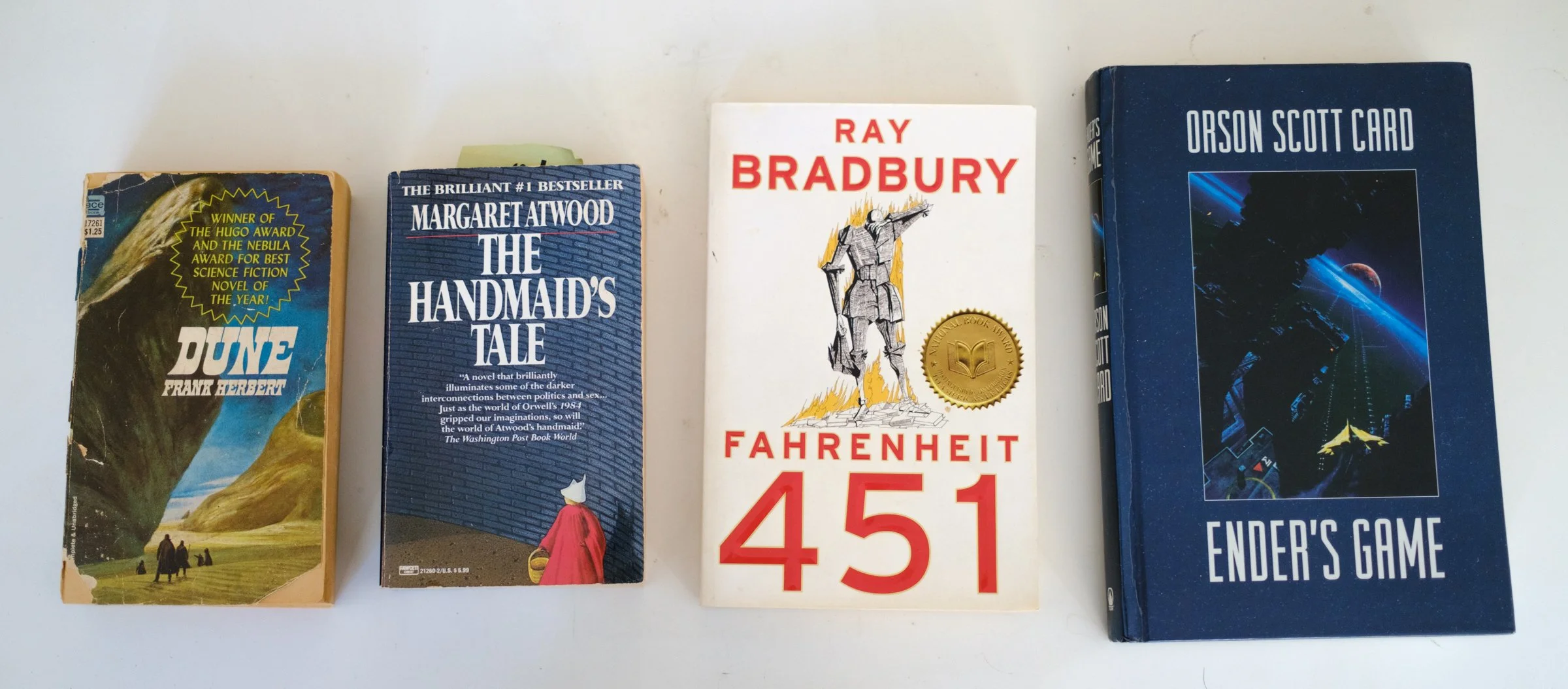
Dune — Frank Herbert, 1965
Dune is not simply a warning about tyranny. It is a warning about longing.
Paul Atreides does not seize power through brute force. He is received by a population desperate for meaning. Prophecy becomes infrastructure. Religion becomes logistics. Once belief replaces consent, violence no longer feels like violence — it feels inevitable.
Herbert’s most unsettling insight is that even a well-intentioned ruler becomes monstrous once the system demands faith rather than accountability.
Fascism here is not hatred first – but destiny.
Bureaucracy as Moral Weapon
The Handmaid’s Tale — Margaret Atwood, 1985
Margaret Atwood understood that authoritarianism rarely invents cruelty. It repurposes it.
Gilead emerges legally. Gradually. Rights are suspended temporarily. Language is moralized. Each step is framed as protection.
The citizens are not ignorant. They are exhausted. Adaptation feels safer than resistance. Compliance feels temporary-
until it isn’t.
Fascism thrives not only on belief,
but on fatigue.
When No One Objects
Fahrenheit 451 — Ray Bradbury, 1953
Bradbury’s firemen burn books not with rage, but routine.
The most terrifying figures are not the enforcers, but the neighbors who do not care. Censorship succeeds when complexity becomes inconvenient. When people prefer comfort to contradiction.
Fascism flourishes when curiosity fades.
Violence Without Proximity
Ender’s Game — Orson Scott Card, 1985
In Ender’s Game, violence is abstracted until responsibility dissolves. Enemies become simulations. Children become instruments. Killing becomes procedural.
Ender is not cruel.
He is effective.
Fascism depends on this abstraction - violence carried out at a distance, sanitized by systems, justified by outcomes.
Andor - The Banality of Empire (and Why It Dresses Better)
Andor — created by Tony Gilroy, 2022
Andor finally understands the Empire not as spectacle, but as administration.
The Empire files reports. Runs prisons efficiently. Speaks in professional language.
It dresses well.
This matters.
Aesthetics are reassurance. Uniforms communicate order. Body armor communicates inevitability. The rebels look desperate. The Empire looks competent.
Advertising agencies understand this. Modern hate movements understand it. Immigration agents cosplay as military. Officials wear tactical gear not for protection, but for messaging.
Fascism performs itself before it enforces itself.
As Mon Mothma names it:
“The loss of an objective reality is perhaps the most dangerous thing.”
When truth collapses, power does not need to lie convincingly.
It only needs to speak the loudest.
Law, Order, and the Architecture of Control
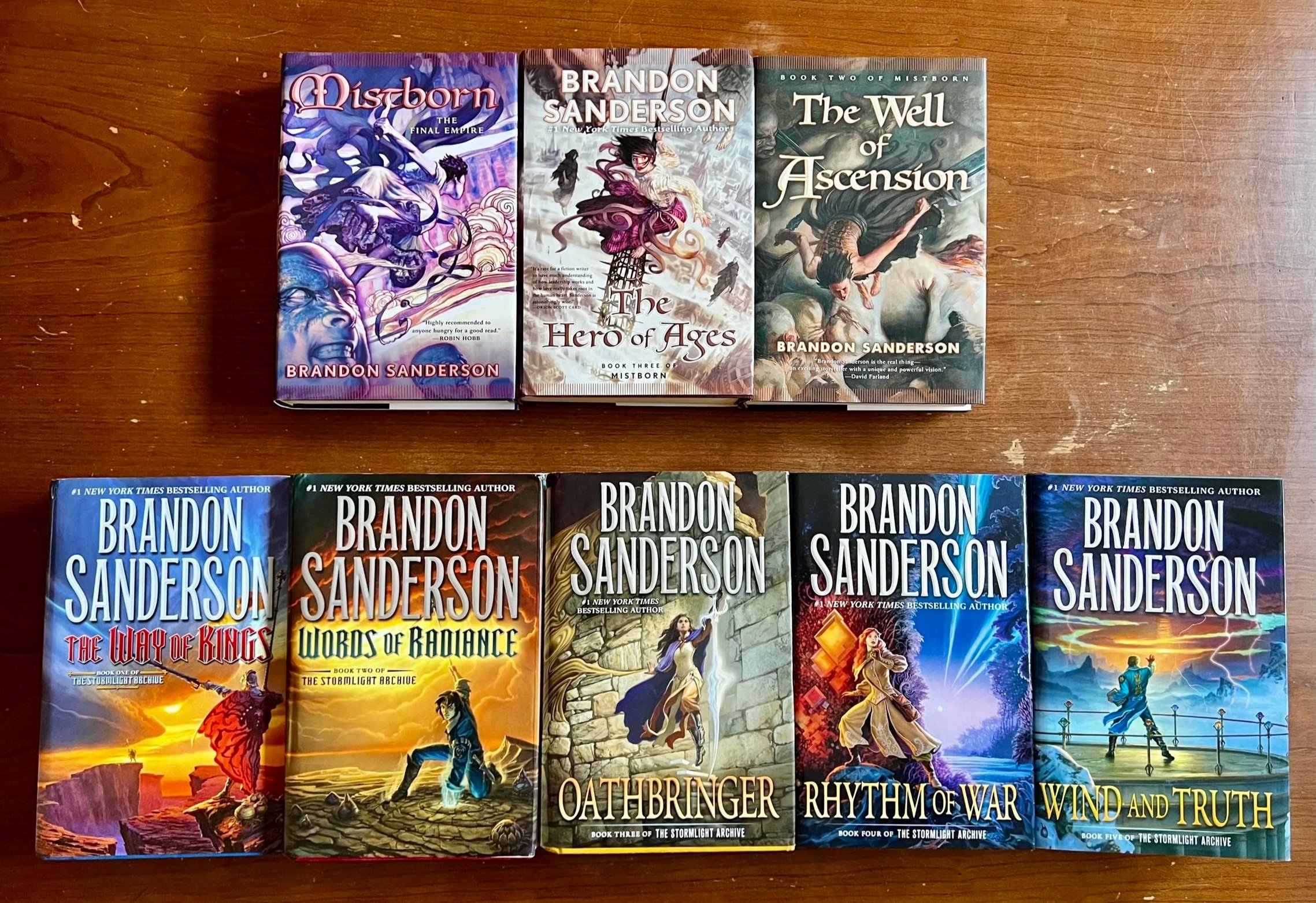
Brandon Sanderson’s work is often misread as morally clean. It is not. It is structural.
Mistborn (Era One) — The Tyranny of Stability
The Lord Ruler is not chaos incarnate. He is a systems administrator. His empire is brutal—but stable. Rebellion is framed as irresponsibility. Suffering is justified by survival.
The most dangerous idea in Mistborn is not oppression—it is the belief that only one system can work.
Even after the tyrant falls, the survivors struggle not to recreate him.
Revolutions inherit habits.
The Stormlight Archive — Moral Complexity Under Pressure
Stormlight’s Radiants are not chosen for purity. They are chosen for fracture.
Dalinar Kholin’s arc is a direct confrontation with fascist logic: the belief that unity excuses atrocity. His journey is not toward power, but restraint. Not toward dominance, but accountability.
Sanderson asks a difficult question:
What happens when honor becomes hierarchy?
When oaths replace ethics?
When unity becomes obedience?
Fascism often begins with the language of virtue.
Inherited Cruelty
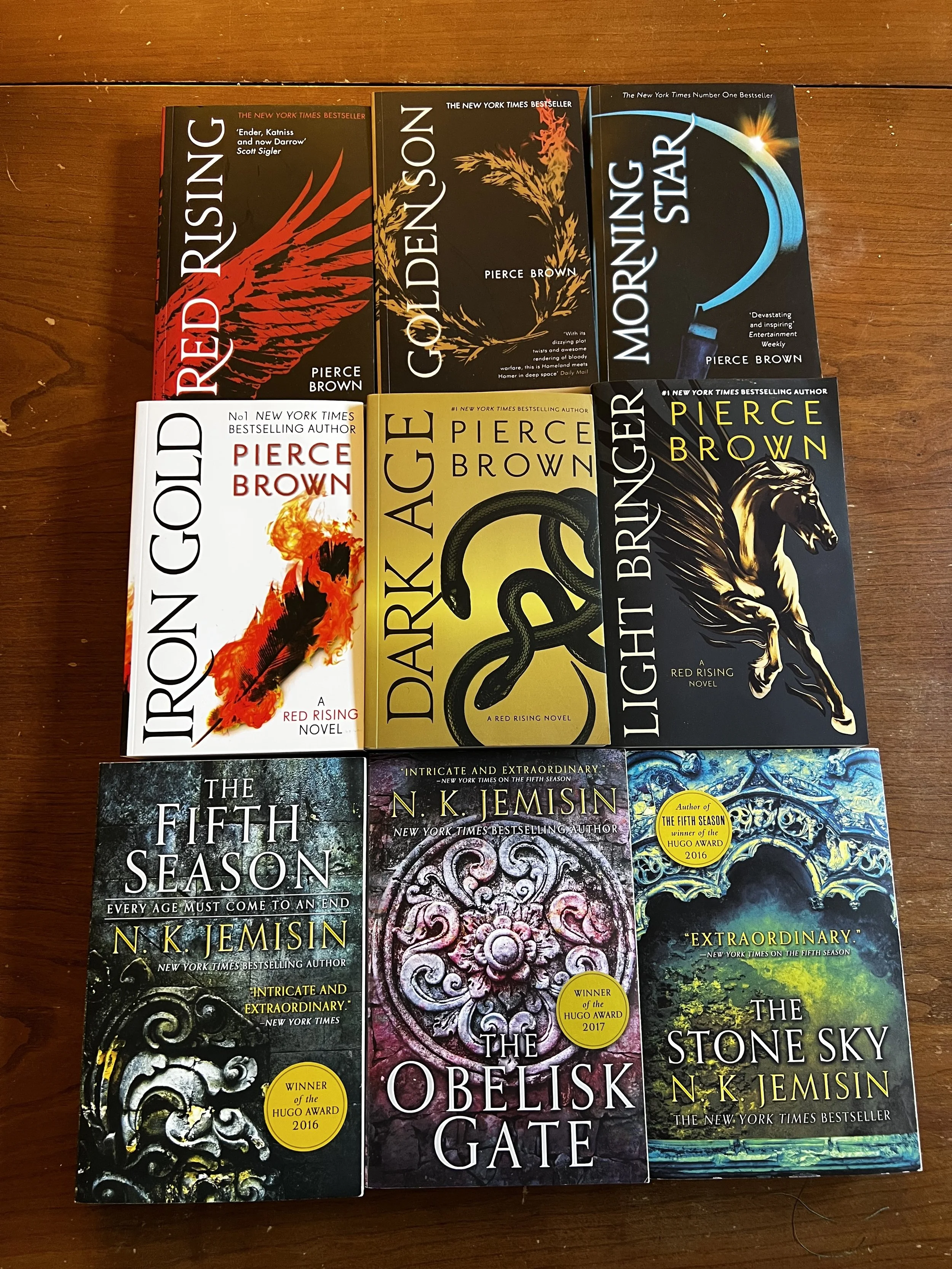
Red Rising — Pierce Brown, 2014
The Broken Earth — N.K. Jemisin, 2015–2017
Red Rising presents fascism as aristocratic theater—hierarchy staged as destiny. Color, caste, and ritual turn inequality into pageantry. What begins as rebellion risks becoming replication. The revolution does not merely fight the system; it absorbs its logic.
The warning is not that revolt fails -
but that power, once seized, retains the muscle memory of what it replaced.
N.K. Jemisin’s Broken Earth goes further. Oppression is not enforced by belief alone—it is embedded into survival itself. Cruelty becomes infrastructure. People participate not because they believe, but because refusal feels fatal.
Fascism here is not spectacle or myth.
It is necessity engineered to look natural.
What Red Rising and The Broken Earth reveal is not how fascism is invented, but how it is inherited.
Once cruelty becomes structural, it no longer needs belief to persist - only memory.
This is where many Japanese speculative works begin.
Fascism, Memory, and the Seduction of Order
Manga & Anime
Japanese speculative fiction often approaches fascism differently than its Western counterparts. Rather than framing authoritarianism as an external seizure of power, manga and anime frequently explore it as something that re-emerges from within society, justified by trauma, catastrophe, and the desire for stability.
These stories are shaped by post-war memory. Nuclear devastation. Occupation. Rapid modernization. The question they ask is not how fascism arrives, but why people accept it again.
Military Authority After the End of the World
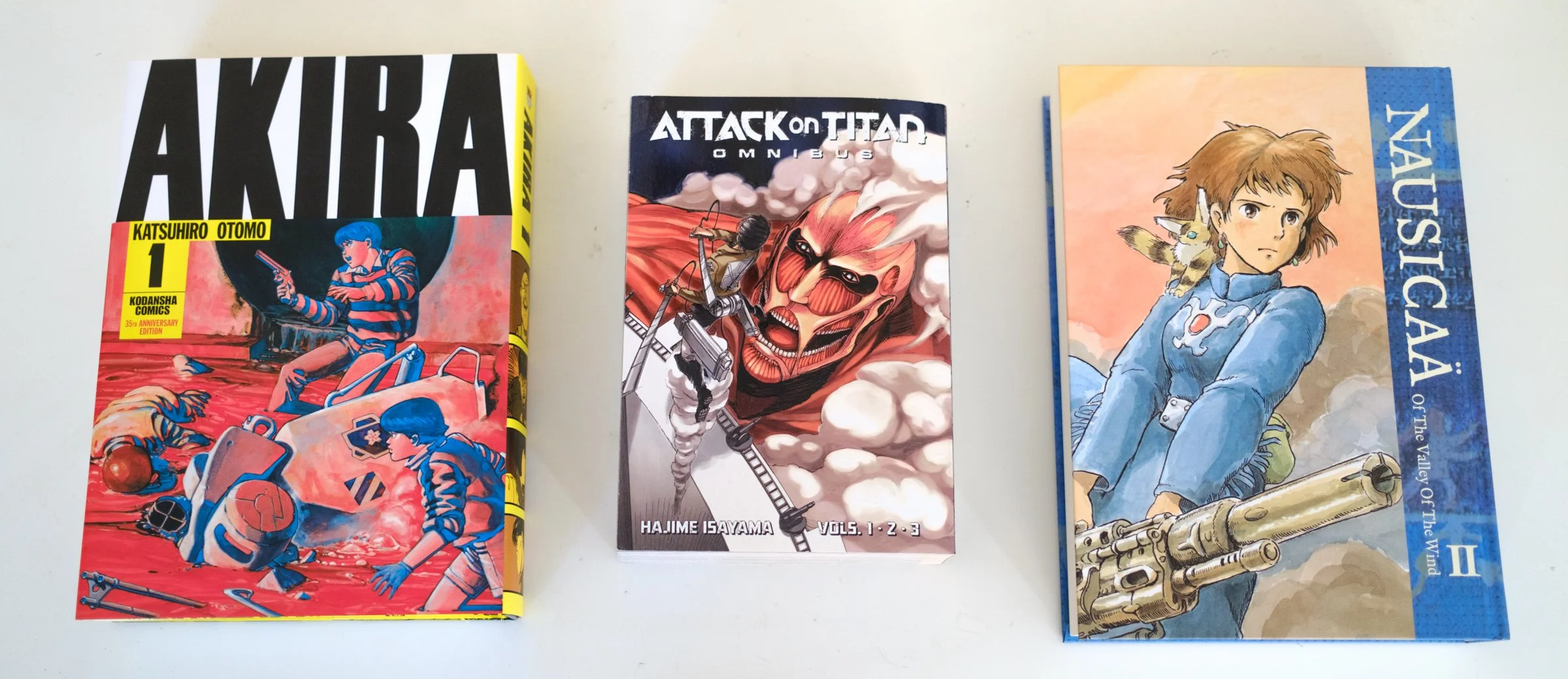
Akira — Katsuhiro Otomo, manga 1982–1990; film 1988
Katsuhiro Otomo’s Akira exists in two essential forms: the manga, sprawling and political, and the anime, compressed and operatic. Both are about fascism, but they approach it from different angles.
In the manga, Neo-Tokyo is governed by a military regime that never relinquished emergency powers after catastrophe. Parliament exists, but it is hollow. Civilian government is performative. Surveillance is constant. Protest is routine—and routinely crushed. Children are experimented on, not out of madness, but bureaucratic necessity.
This is crucial: the state does not justify itself with belief or doctrine. It justifies itself with continuity.
The anime condenses this into visual language: soldiers in riot gear, helicopters sweeping city blocks, psychic children treated as classified assets. Authority is omnipresent, professional, and cold. The military is not villainous in tone.
It is procedural.
Akira understands something deeply unsettling: catastrophe does not radicalize societies toward freedom. It radicalizes them toward control. Emergency powers do not expire.
They normalize.
Fascism here is not fanaticism.
It is permanent crisis management.
Fear as the Engine of Genocide
Attack on Titan — Hajime Isayama, manga 2009–2021; anime 2013–2023
Few modern works examine fascism as nakedly as Attack on Titan, and fewer still implicate the audience so thoroughly.
Both the manga and anime present a society structured entirely around existential fear. The walls are not just fortifications—they are belief structures. They define who is human, who is enemy, and who deserves survival.
Early on, the state’s authoritarianism feels justified. The threat is real. The violence appears necessary. But as the story unfolds, Attack on Titan reveals how fear is cultivated, preserved, and exploited.
History is rewritten. Memory is restricted. Truth becomes classified. Enemies are racialized and dehumanized until extermination feels defensive.
The manga is especially brutal in its clarity: fascism does not require lies—it requires selective truth. Enough honesty to feel grounded. Enough omission to remain obedient.
What makes Attack on Titan so disturbing is that its characters are not caricatures. They are earnest. Afraid. Trying to protect their families.
Genocide is not framed as cruelty.
It is framed as prevention.
That is the warning.
Fascism thrives when survival narratives replace ethical ones.
Power Versus Care
Nausicaä of the Valley of the Wind — Hayao Miyazaki, manga 1982–1994; film 1984
Hayao Miyazaki’s Nausicaä exists again in two essential forms: the film, lyrical and restrained, and the manga, expansive, darker, and more politically complex.
Both are critiques of imperial militarism, but the manga in particular dismantles the governing logic of fascist realism.
Multiple states pursue domination under the guise of survival. Ancient weapons are resurrected. Environmental collapse becomes justification for conquest. Leaders insist there are no alternatives.
This is the language of fascism:
there is no other way.
Nausicaä herself represents a different model of power entirely. She listens. She studies. She refuses simplification. She understands that control destroys what it claims to protect.
What makes Nausicaä vital is that it rejects the core fascist assumption—that compassion is naïve. In Miyazaki’s world, militarism is not strength. It is impatience disguised as necessity.
The manga is especially unforgiving: every empire believes it is acting rationally. Every atrocity is justified. Every collapse is blamed on someone else.
Fascism here is not loud.
It is reasonable.
What Manga and Anime Understand That We Often Miss
Across Akira, Attack on Titan, and Nausicaä, a shared insight emerges:
Fascism is born from trauma, not insanity
Authority reasserts itself after collapse
Fear simplifies ethics
Control masquerades as protection
These stories do not depict fascism as foreign or alien. They depict it as a return to form—a familiar structure stepping back into place when uncertainty becomes unbearable.
Where Western fiction often asks Who is the tyrant? Manga and anime ask a harder question:
Why did everyone agree?
That question lingers.
Throughline
Across novels, films, comics, manga, and anime, the pattern remains consistent:
Fascism emerges from fear, not madness
It is maintained by aesthetics, not just violence
It thrives when truth fragments and complexity collapses
It recruits ordinary people by offering certainty
Speculative fiction does not dramatize fascism to shock us.
It slows it down so we can see how easily we would participate.
Fascism does not begin with camps.
That is a byproduct.
It begins with simplification.
With language narrowing.
With truth fragmenting.
With aesthetics replacing ethics.
With people choosing order over justice.
Speculative fiction does not ask “What if this happened?”
It documents how often it already has.
Fascism is not a monster at the gate.
It is a mirror—
polished
until participation feels like normalcy
and recognition arrives too late.