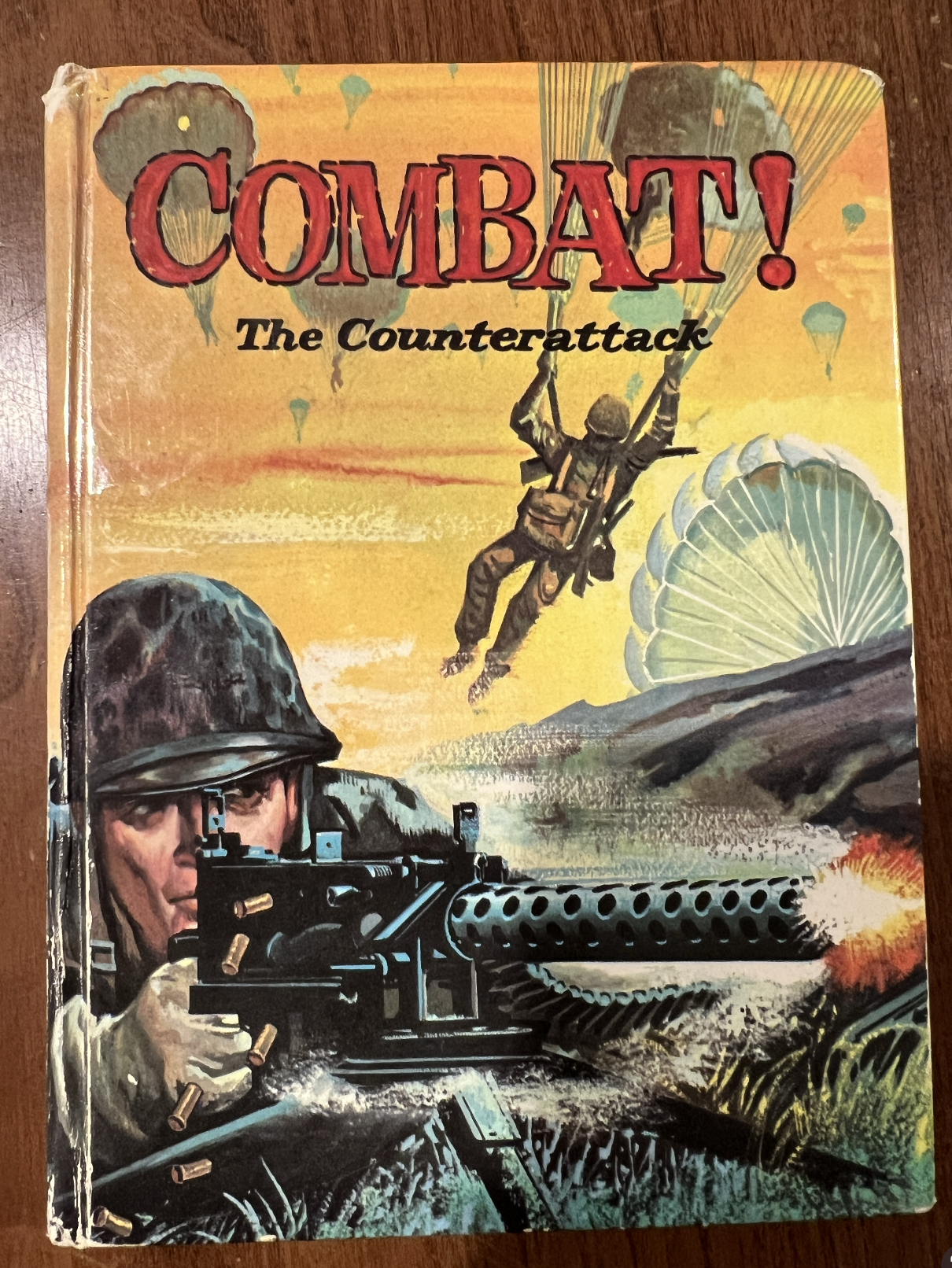
books

Category Spotlight: War & Conflict by matt freire

As war continues to ripple through geopolitics—and inch ever closer to home—it has drawn me back to my shelves, where its influence bleeds quietly into almost every section.

War and conflict is a category that carries weight. Not because it glorifies violence, but because it offers clarity, context, and scale. It is a way to measure the world, and over time, a way to measure myself. The books gathered here span photo books, graphic novels, comics, nonfiction, and fiction—each medium revealing something the others cannot.

Some works document war directly. Photo books by Eddie Adams, Don McCullin, Lynsey Addario, and David Douglas Duncan freeze moments that refuse to stay contained within the frame. These images are not spectacles; they are evidence. They remind us that violence is not abstract, and that witnessing carries its own ethical burden. The camera does not neutralize suffering—it preserves it.

Other books explore war through memory and reflection. Man’s Search for Meaning, The Long Walk, The Things They Carried, Born on the Fourth of July, and Hiroshima focus less on battle than on endurance. They trace how conflict reshapes identity, belief, and time itself. War may end on paper, but it persists in the body, in memory, and in silence passed between generations.

Graphic novels and illustrated works approach war through simplification without diminishing impact. Maus, Barefoot Gen, Safe Area Goražde, They Called Us Enemy, and Onward Towards Our Noble Deaths use restraint, metaphor, and visual economy to convey trauma that prose alone often cannot. In reducing form, they sharpen meaning. The distance they create allows the truth to land harder.

There is also war refracted through fiction and fantasy. Works like The Forever War, Gates of Fire, and Malazan: Deadhouse Gates, reject romanticism. Armies function as institutions rather than instruments of glory. Soldiers endure logistics, command failures, boredom, terror, and loyalties shaped by necessity rather than choice. Victory is never pure. Discipline becomes both survival mechanism and moral burden. It is no coincidence that many veterans gravitate toward speculative fiction—distance allows honesty. Fantasy and science fiction create space to examine war without reenacting it.

For many veterans, myself included, this category carries a complicated nostalgia—one flavored with anxiety. A longing for simpler times. Mission, gym, chow hall, editing, sleep. Some of the most exciting and most stressful moments of life relegated to memory, a lifetime ago yet ever-present when the mind wanders. My own passage into adulthood came through the lens of a combat cameraman. My exposure to violence was digitized, framed, archived. That experience is constantly weighed and reinterpreted as age and reflection take hold—much like returning to a book and discovering new meaning hidden in the familiar.

These works are not collected for answers. They are collected because they ask better questions. About power, belief, loyalty, and cost. About how societies justify violence, and how individuals live with it afterward. About the stories we tell to make sense of what cannot be undone.

Taken together, this section of the library is less about war itself than about its ripples—how conflict reshapes cultures, families, and inner lives long after the fighting stops. These books do not offer closure. They offer continuity. A reminder that understanding is not a destination, but a practice—one revisited, again and again, like a well-worn page.

Recommended Reading: Witnessing War, Memory, and Honor

As a continuation of the exploration in Category Spotlight: War & Conflict, these works offer focused glimpses into how conflict shapes individuals, societies, and imagination. Each title captures different facets of war’s legacy—personal endurance, cultural memory, moral complexity, and the human cost of violence.

Photojournalism & Direct Witness

Bigger Than the Frame

  • Author: Eddie Adams

  • Media type: Photo book

  • Year: 2002

  • Short note: Ethics of witnessing

  • Expanded note: Adams reflects on the moral weight of photographing violence. The book interrogates how images shape memory, responsibility, and historical record long after the shutter closes.

Life, Death and Everything in Between

  • Author: Don McCullin

  • Media type: Photo book

  • Year: 2011

  • Short note: Relentless witness

  • Expanded note: A lifetime of war photography stripped of sentimentality. McCullin documents suffering as repetitive and unresolved, emphasizing the cumulative psychological toll of conflict.

Of Love and War

  • Author: Lynsey Addario

  • Media type: Photo memoir

  • Year: 2015

  • Short note: Cost of seeing

  • Expanded note: Addario pairs frontline imagery with personal narrative, revealing how bearing witness reshapes relationships, identity, and emotional endurance.

This Is War

  • Author: David Douglas Duncan

  • Media type: Photo book

  • Year: 1951

  • Short note: Combat intimacy

  • Expanded note: Duncan’s Korean War photographs erase distance between subject and viewer, presenting war as chaotic, immediate, and profoundly human.

Memory, Endurance & Lived Experience

Man’s Search for Meaning

  • Author: Viktor E. Frankl

  • Media type: Nonfiction / Memoir

  • Year: 1946

  • Short note: Meaning under suffering

  • Expanded note: Frankl reframes survival as an existential act. War becomes a crucible for examining purpose, agency, and moral choice under extreme conditions.

The Long Walk

  • Author: Sławomir Rawicz

  • Media type: Memoir

  • Year: 1956

  • Short note: Survival beyond captivity

  • Expanded note: A trek shaped by war even after combat ends. Endurance here is physical, moral, and psychological—war’s imprint persists long after escape.

The Things They Carried

  • Author: Tim O’Brien

  • Media type: Fiction / Autobiographical

  • Year: 1990

  • Short note: Memory as burden

  • Expanded note: O’Brien collapses the line between fact and fiction to show how war lives on through memory, guilt, and unresolved fear.

Born on the Fourth of July

  • Author: Ron Kovic

  • Media type: Memoir

  • Year: 1976

  • Short note: Patriotism undone

  • Expanded note: A veteran’s reckoning with injury and national myth. The book traces how war fractures identity and belief long after the fighting stops.

Hiroshima

  • Author: John Hersey

  • Media type: Nonfiction / Journalism

  • Year: 1946

  • Short note: Civilian aftermath

  • Expanded note: Six ordinary lives reveal the intimate, irreversible consequences of modern warfare. The focus is not strategy, but survival.

Graphic & Illustrated Witness

Maus

  • Author / Illustrator: Art Spiegelman

  • Media type: Graphic memoir

  • Year: 1986–1991

  • Short note: Inherited trauma

  • Expanded note: By using metaphor and visual restraint, Maus examines how war’s trauma passes across generations, reshaping identity and memory.

Barefoot Gen

  • Author / Illustrator: Keiji Nakazawa

  • Media type: Graphic memoir

  • Year: 1973–1987

  • Short note: Civilian devastation

  • Expanded note: A child’s view of Hiroshima. The simplicity of form intensifies the horror, emphasizing how war permanently scars civilian life.

Safe Area Goražde

  • Author / Illustrator: Joe Sacco

  • Media type: Graphic journalism

  • Year: 2000

  • Short note: Life under siege

  • Expanded note: Sacco documents war as daily existence rather than spectacle, focusing on civilians navigating prolonged violence and scarcity.

They Called Us Enemy

  • Author: George Takei

  • Illustrator: Harmony Becker

  • Media type: Graphic memoir

  • Year: 2019

  • Short note: Domestic war ripple

  • Expanded note: Examines Japanese-American internment as a consequence of wartime fear, showing how conflict reshapes citizenship and belonging.

Onward Towards Our Noble Deaths

  • Author / Illustrator: Shigeru Mizuki

  • Media type: Manga

  • Year: 1973

  • Short note: Futility of sacrifice

  • Expanded note: Japanese soldiers abandoned by command reveal how honor collapses under institutional neglect and ideological rigidity.

Fiction, Fantasy & Speculative War

The Forever War

  • Author: Joe Haldeman

  • Media type: Science Fiction

  • Year: 1974

  • Short note: Veteran alienation

  • Expanded note: Time dilation mirrors the veteran experience—returning home to a world that has moved on, culturally and emotionally.

Gates of Fire

  • Author: Steven Pressfield

  • Media type: Historical Fiction

  • Year: 1998

  • Short note: Discipline over glory

  • Expanded note: War is framed as collective endurance rather than heroism. Identity is forged through suffering, repetition, and loyalty.

Malazan Book of the Fallen: Deadhouse Gates

  • Author: Steven Erikson

  • Media type: Epic Fantasy

  • Year: 2000

  • Short note: Institutional warfare

  • Expanded note: The Chain of Dogs arc portrays war as procedural and morally exhausting. Armies function as systems; soldiers endure logistics, command failure, and necessity-driven loyalty.
WAR & CONFLICT — ANNOTATED LIBRARY CATALOG by matt freire

This is a curated portion of the Linden Analog Library, focused on war and its human, cultural, and moral impact across multiple media.

I. Memoir, Lived Experience & Moral Reckoning

War remembered from inside the body.

Born on the Fourth of July

  • Creator: Ron Kovic

  • Type: Nonfiction / Memoir

  • Year: 1976

  • Short note: Patriotism undone

  • Expanded note: Kovic charts the collapse of national myth through personal injury and disillusionment. War reshapes identity long after combat ends.

Charlie Wilson’s War

  • Creator: George Crile

  • Type: Nonfiction

  • Year: 2003

  • Short note: Policy blowback

  • Expanded note: U.S. covert support for Afghan mujahideen during the Soviet-Afghan War illustrates the long-term consequences of distant decision-making. Decisions made far from battlefields echo across politics, culture, and regional security.

Here I Am

  • Creator: Alan Huffman

  • Type: Nonfiction

  • Year: 2009

  • Short note: Inherited war memory

  • Expanded note: Examines how silence and trauma transmit across generations; a son confronts his father’s Vietnam experience.

Hiroshima

  • Creator: John Hersey

  • Type: Nonfiction / Journalism

  • Year: 1946

  • Short note: Civilian aftermath

  • Expanded note: Documents six lives altered by the atomic bomb, making the effects of war immediate, personal, and intimate.

Looking for the Good War

  • Creator: Elizabeth Samet

  • Type: Nonfiction

  • Year: 2021

  • Short note: Military myth questioned

  • Expanded note: A West Point professor interrogates the simplification of wars into “good” and “bad,” revealing the dangers of moral mythmaking.

Man’s Search for Meaning

  • Creator: Viktor E. Frankl

  • Type: Nonfiction / Memoir

  • Year: 1946

  • Short note: Meaning under suffering

  • Expanded note: Holocaust survival reframes endurance as existential choice. War is the environment forcing moral and psychological reckoning.

The Long Walk: The True Story of a Trek to Freedom

  • Creator: Sławomir Rawicz

  • Type: Nonfiction / Memoir

  • Year: 1956

  • Short note: Endurance beyond war

  • Expanded note: Survival becomes a moral and physical trial after captivity. The imprint of war persists through the body’s demand for movement and resilience.

The Things They Carried

  • Creator: Tim O’Brien

  • Type: Fiction / Autobiographical

  • Year: 1990

  • Short note: Memory as burden

  • Expanded note: Blends fact and fiction to show how soldiers carry fear, guilt, and moral weight. Memory extends conflict beyond the battlefield.

Tribe

  • Creator: Sebastian Junger

  • Type: Nonfiction

  • Year: 2016

  • Short note: Belonging after war

  • Expanded note: Explores why veterans miss the community of combat, highlighting the social and cultural gaps in civilian life after conflict.

War

  • Creator: Sebastian Junger

  • Type: Nonfiction

  • Year: 2010

  • Short note: Brotherhood in danger

  • Expanded note: Embedded reporting captures fear, intimacy, and survival within modern military units.

Heroes

  • Creator: Joe McGinniss

  • Type: Nonfiction

  • Year: 1976

  • Short note: Myth vs reality

  • Expanded note: Investigates how hero narratives distort the lived experience of Vietnam soldiers, juxtaposing media myth with human cost.

Violence of Action

  • Creator: Marty Slovak

  • Type: Nonfiction / Memoir

  • Year: 2018

  • Short note: Combat ethics

  • Expanded note: Explores the psychological and moral consequences of direct action in warfare, showing how violence reshapes identity and judgment.

II. Photojournalism & Witnessing

War framed, frozen, and morally weighted.

Bigger Than the Frame

  • Creator: Eddie Adams

  • Type: Nonfiction / Photography

  • Year: 2006

  • Short note: Ethics of images

  • Expanded note: Reflects on the responsibility of photographers documenting violence; images outlive their creators’ intentions.

Life, Death and Everything in Between

  • Creator: Don McCullin

  • Type: Photojournalism

  • Year: 2010

  • Short note: Relentless witness

  • Expanded note: War as morally exhausting and unglamorous; suffering is shown without spectacle.

Of Love and War

  • Creator: Lynsey Addario

  • Type: Memoir / Photojournalism

  • Year: 2015

  • Short note: Cost of seeing

  • Expanded note: Frontline reporting paired with vulnerability; documents emotional and ethical weight of witnessing conflict.

This Is War

  • Creator: David Douglas Duncan

  • Type: Photojournalism

  • Year: 1951

  • Short note: Combat intimacy

  • Expanded note: Korean War photography removes distance between viewer and battlefield; the camera experiences chaos firsthand.

Vietnam

  • Creator: Eddie Adams

  • Type: Photojournalism

  • Year: 1988

  • Short note: Context beyond icon

  • Expanded note: Goes beyond famous images to provide full human and ethical context of the Vietnam War.

Witness: Magnum Photographers

  • Creator: Magnum Photos

  • Type: Photojournalism

  • Year: 2007

  • Short note: Collective memory

  • Expanded note: Curates diverse perspectives, showing war as recurring human pattern rather than isolated episodes.

III. Graphic Novels & Illustrated War

Abstraction that sharpens moral and human impact.

Barefoot Gen

  • Creator / Illustrator: Keiji Nakazawa

  • Type: Graphic Fiction

  • Year: 1973–1985

  • Short note: Civilian devastation

  • Expanded note: Hiroshima aftermath from a child’s perspective; simplicity intensifies horror.

In the Shadow of No Towers

  • Creator / Illustrator: Art Spiegelman

  • Type: Graphic Nonfiction

  • Year: 2004

  • Short note: Trauma without distance

  • Expanded note: 9/11 as psychic rupture at home; personal and societal trauma intertwined.

Now Let Me Fly

  • Creators: Ronald Wimberly, Brahm Revel

  • Illustrator: Brahm Revel

  • Type: Graphic Nonfiction / Memoir

  • Year: 2016

  • Short note: Harlem Hellfighters

  • Expanded note: WWI Black aviators face race, recognition, and exclusion; war intersects with social injustice.

Onward Towards Our Noble Deaths

  • Creator / Illustrator: Shigeru Mizuki

  • Type: Graphic Fiction

  • Year: 1973

  • Short note: Futility of sacrifice

  • Expanded note: Japanese soldiers abandoned by leadership; honor collapses under neglect.

Safe Area Goražde

  • Creator / Illustrator: Joe Sacco

  • Type: Graphic Journalism

  • Year: 2000

  • Short note: Siege lived daily

  • Expanded note: Embeds with civilians; war is a lived condition, not a spectacle.

Palestine

  • Creator / Illustrator: Joe Sacco

  • Type: Graphic Journalism / Nonfiction

  • Year: 1993–1995

  • Short note: Occupation documented

  • Expanded note: Chronicling daily Palestinian life under occupation, emphasizing systemic violence and lived experience.

The Photographer

  • Creators: Emmanuel Guibert, Didier Lefèvre, Frédéric Lemercier

  • Type: Graphic Nonfiction

  • Year: 2003

  • Short note: Documentation layered

  • Expanded note: Combines photography and illustration to show war’s recording and interpretation.

They Called Us Enemy

  • Creators: George Takei, Justin Eisinger, Steven Scott

  • Illustrator: Harmony Becker

  • Type: Graphic Memoir

  • Year: 2019

  • Short note: Domestic war ripples

  • Expanded note: Japanese-American internment shows how war reshapes citizenship far from battlefields.

Twist of Fate

  • Creator / Illustrator: Paco Roca

  • Type: Graphic Fiction

  • Year: 2013

  • Short note: Ordinary lives, war

  • Expanded note: Spanish Republicans displaced; war interrupts and defines lives long after fighting ends.

Up Front

  • Creator / Illustrator: Bill Mauldin

  • Type: Illustrated Memoir / Cartoons

  • Year: 1945

  • Short note: Survival humor

  • Expanded note: Frontline humor as coping; exhaustion, cynicism, and moral questioning.

Persepolis

  • Creator / Illustrator: Marjane Satrapi

  • Type: Graphic Memoir

  • Year: 2000–2003

  • Short note: Childhood in revolution

  • Expanded note: Growing up during the Iranian Revolution; civilian experience and moral questioning in wartime.

Goddamn This War!

  • Creator / Illustrator: Jacques Tardi

  • Type: Graphic Fiction / Historical

  • Year: 2008

  • Short note: Rage at machinery

  • Expanded note: WWI critique; soldiers expendable under indifferent command.

It Was the War of the Trenches

  • Creator / Illustrator: Jacques Tardi

  • Type: Graphic Fiction / Historical

  • Year: 1993

  • Short note: No glory here

  • Expanded note: Brutal episodic account; dismantles heroic narrative, emphasizing routine death and arbitrary survival.

The Sheriff of Babylon

  • Creators: Tom King (writer), Mitch Gerads (artist)

  • Type: Graphic Fiction

  • Year: 2015–2017

  • Short note: Aftermath policing

  • Expanded note: Post-invasion Iraq; official conflict ends but chaos and unresolved violence continue institutionally and personally.

Our Story

  • Creator / Illustrator: Rao Pingru

  • Type: Graphic Memoir / Nonfiction

  • Year: 2017

  • Short note: War, love, survival

  • Expanded note: Rao Pingru’s WWII service and postwar life under political upheaval in China; war shapes identity, relationships, and resilience.

Slaughterhouse-Five (Graphic Novel Adaptation)

  • Creator: Kurt Vonnegut / Adapted by Ryan North

  • Illustrator: Albert Monteys

  • Type: Graphic Fiction

  • Year: 2020

  • Short note: Absurdist trauma

  • Expanded note: Maintains dark humor, temporal dislocation, and commentary on the absurdity of modern conflict; war experienced as chaotic, senseless, and deeply affecting.

Kent State: Four Dead in Ohio

  • Creator / Illustrator: Derf Backderf

  • Type: Graphic Nonfiction

  • Year: 2010

  • Short note: Domestic conflict

  • Expanded note: May 4, 1970 shootings show how authority and violence shape memory, culture, and conscience.

Six Days

  • Creator / Illustrator: Robert Venditti

  • Type: Graphic Fiction / War

  • Year: 2018

  • Short note: Modern combat

  • Expanded note: High-intensity contemporary warfare; tactical, moral, and emotional pressures; leadership and human cost highlighted.

The Other Side

  • Creator: Jason Aaron

  • Illustrator: Cameron Stewart, Jordie Bellaire, Dave McCaig

  • Type: Graphic Fiction / War

  • Year: 2016

  • Short note: Enemy perspectives

  • Expanded note: Vietnam War shown from American and Vietnamese perspectives; blurs hero and enemy, highlighting shared humanity.

The Diary of Anne Frank (Graphic Adaptation)

  • Creator / Illustrator: Ari Folman, David Polonsky

  • Type: Graphic Memoir / Nonfiction

  • Year: 2018

  • Short note: Childhood under siege

  • Expanded note: Preserves immediacy of Anne Frank’s experience hiding during the Holocaust, showing fear, hope, and resilience.

300

  • Creator / Illustrator: Frank Miller

  • Type: Graphic Fiction / Historical

  • Year: 1998

  • Short note: Mythic violence

  • Expanded note: Stylized war mythologizes violence; examines simplified narratives of heroism and sacrifice.

IV. Fiction, Fantasy & Speculative War

Distance provides clarity on morality, strategy, and human cost.

Gates of Fire

  • Creator: Steven Pressfield

  • Type: Historical Fiction

  • Year: 1998

  • Short note: Discipline as survival

  • Expanded note: Collective identity forged under threat; endurance prioritized over glory.

The Dandelion Dynasty

  • Creator: Ken Liu

  • Type: Fantasy / Speculative War

  • Year: 2015–2023

  • Books in Series:

    1. The Grace of Kings (2015)

    2. The Wall of Storms (2016)

    3. The Veiled Throne (2021)

    4. Speaking Bones (2023)

  • Short note: Empire & revolution

  • Expanded note: Political intrigue, rebellion, and warfare in an East-Asian–inspired fantasy world; explores moral complexity and the human cost of empire.

Heroes

  • Creator: Joe Abercrombie

  • Type: Fantasy / War Fiction

  • Year: 2011

  • Short note: Brutal human warfare

  • Expanded note: Focuses on a single week of brutal conflict; examines randomness of survival, moral ambiguity, and the grim realities of heroism.

Malazan: Deadhouse Gates

  • Creator: Steven Erikson

  • Type: Fantasy

  • Year: 2000

  • Short note: Institutional warfare

  • Expanded note: Armies function as systems; endurance, loyalty, and suffering emphasized over heroism. The Chain of Dogs arc captures the cost on ordinary soldiers.

Malazan: The Bonehunters

  • Creator: Steven Erikson

  • Type: Fantasy

  • Year: 2006

  • Short note: War’s unrelenting toll

  • Expanded note: Aftermath of campaigns, political chaos, strain on soldiers and commanders; human cost of sustained conflict highlighted.

Faithful and the Fallen

  • Creator: John Gwynne

  • Type: Fantasy

  • Year: 2012–2016

  • Books in Series:

    1. Malice (2012)

    2. Ruin (2013)

    3. Valor (2014)

    4. Wrath (2016)

  • Short note: Heroic conflict

  • Expanded note: Epic battles, loyalty, betrayal, moral weight of leadership, and endurance of ordinary soldiers.

The Forever War

  • Creator: Joe Haldeman

  • Type: Science Fiction

  • Year: 1974

  • Short note: Alienation after service

  • Expanded note: Time dilation as metaphor for veterans’ dislocation; society changes faster than soldiers do.

Red Mars / Green Mars / Blue Mars

  • Creator: Kim Stanley Robinson

  • Type: Science Fiction

  • Year: 1992–1996

  • Short note: Environmental & political conflict

  • Expanded note: Explores the challenges of colonizing Mars, including political intrigue, environmental crises, and human competition for resources. The trilogy portrays conflict as systemic and multifaceted, showing how ambition, ideology, and survival pressures can create prolonged, morally complex struggles akin to war.

Musashi

  • Creator: Eiji Yoshikawa

  • Type: Historical Fiction

  • Year: 1935–1939

  • Short note: Warrior philosophy

  • Expanded note: War as spiritual discipline and personal transformation.

V. History, Anthropology & Structural Violence

War as continuity, not exception.

Bury My Heart at Wounded Knee

  • Creator: Dee Brown

  • Type: Nonfiction

  • Year: 1970

  • Short note: Colonial violence

  • Expanded note: U.S. expansion framed as sustained warfare against Indigenous peoples.

The Inconvenient Indian

  • Creator: Thomas King

  • Type: Nonfiction

  • Year: 2012

  • Short note: Ongoing conflict

  • Expanded note: War persists culturally and politically long after weapons are put down.

The Daughters of Kobani

  • Creator: Gayle Tzemach Lemmon

  • Type: Nonfiction / Journalism

  • Year: 2016

  • Short note: Women in war

  • Expanded note: Chronicles Kurdish female fighters against ISIS, exploring courage, resistance, and moral courage under extreme conditions.

Fields of Blood: Religion and the History of Violence

  • Creator: Karen Armstrong

  • Type: Nonfiction / History

  • Year: 2014

  • Short note: Faith and conflict

  • Expanded note: Organized religion both fuels and restrains violence over millennia; intersection of belief and war

A History of God

  • Creator: Karen Armstrong

  • Type: Nonfiction / History

  • Year: 1993

  • Short note: Divine influence

  • Expanded note: Traces the development of the concept of God in Judaism, Christianity, and Islam, highlighting how spiritual evolution shapes cultural and political conflict. War emerges as one outcome of humanity grappling with the divine.

Humane

  • Creator: Samuel Moyn

  • Type: Nonfiction

  • Year: 2021

  • Short note: Ethical contradiction

  • Expanded note: Argues that making war “more humane” may prolong it rather than prevent it.

War: The Anthropology of Armed Conflict

  • Creator: Various

  • Type: Nonfiction

  • Year: 2000

  • Short note: Violence as behavior

  • Expanded note: Examines war as a recurring human pattern rather than anomaly.

VI. War, Honor & Cultural Memory

Ritualized conflict, legacy, and leadership.

Dune Series

  • Creator: Frank Herbert

  • Type: Science Fiction / Political-Military

  • Year: 1965–1985

  • Books in Series:

    1. Dune (1965)

    2. Dune Messiah (1969)

    3. Children of Dune (1976)

    4. God Emperor of Dune (1981)

    5. Heretics of Dune (1984)

    6. Chapterhouse: Dune (1985)

  • Short note: Legacy of leadership and ritual

  • Expanded note: Examines how warfare, religious ideology, and codes of honor shape societies across generations. The series explores how collective memory, heroism, and cultural mythos are constructed through conflict, political strategy, and moral compromise.

Team of Teams: New Rules of Engagement for a Complex World

  • Creator: General Stanley McChrystal (with Tantum Collins, David Silverman, and Chris Fussell)

  • Type: Nonfiction / Military Leadership

  • Year: 2015

  • Short note: Complexity in command

  • Expanded note: McChrystal draws on his experience leading Joint Special Operations Command in Iraq and Afghanistan to show how traditional hierarchical structures often fail in modern warfare. Adaptation, trust, and decentralized decision-making are critical to surviving and succeeding in unpredictable environments.

Lone Wolf and Cub

  • Creator: Kazuo Koike

  • Illustrator: Goseki Kojima

  • Type: Manga

  • Year: 1970–1976

  • Short note: Honor and exile

  • Expanded note: Violence becomes ritualized duty, passed generationally.

Malazan Book of the Fallen

  • Creator: Steven Erikson

  • Type: Fantasy / Epic War

  • Relevant Books for War, Honor & Cultural Memory:

    • Deadhouse Gates (2000)

    • The Bonehunters (2006)

    • Memories of Ice (2001)

    • Toll the Hounds (2002)

  • Short note: Enduring institutional and personal honor

  • Expanded note: Erikson explores how armies, societies, and individuals remember and ritualize war. Loyalty, sacrifice, and moral compromise shape the cultural memory of both nations and communities. Heroism is shown not as mythic, but as lived experience with profound societal repercussions. Ordinary soldiers, leaders, and civilians all carry forward the consequences of prolonged conflict.

The Black Company

  • Creator: Glen Cook

  • Type: Fantasy / Military

  • Years: 1984–Present (original series)

  • Books in Series:

    1. The Black Company (1984)

    2. Shadows Linger (1984)

    3. The White Rose (1985)

    4. Shadow Games (1989)

    5. Dreams of Steel (1990)

    6. Bleak Seasons (1996)

    7. She Is the Darkness (1997)

    8. Water Sleeps (1999)

    9. Soldiers Live (2000)

  • Short note: Soldiers’ memory and morality

  • Expanded note: Chronicles the Black Company mercenary group, focusing on the lived experience of war, loyalty, and ethical ambiguity. Explores how soldiers maintain honor, ritual, and identity amid ongoing campaigns. Cultural memory is encoded in company traditions, stories, and the long shadow of past actions, highlighting the human side of professionalized war.

Polished Mirrors: A Library of Fascist Futures by matt freire

Linden Analog Library — Welcome

I did not come to these books through theory.

I came to them through violence—

captured as it unfolded in real time,

frame by frame.

As a military combat photographer and videographer—Combat Camera, COMCAM—I learned about power from a distance:

through a lens capturing moments, through screens selecting, editing and reliving those moments, and later, as I moved into leadership, from tactical command centers—

several layers removed from consequence.

I’ve been close enough to know how death smells and tastes,

and far enough to see how easily action becomes procedure—

how responsibility thins as it moves up the chain.

This library is being assembled at a moment when state violence is not theoretical, not historical, and not hidden. Images circulate faster than accountability. Official language arrives already prepared. What becomes most ordinary is not the act itself, but how quickly it is explained, filed, and processed as procedure.

I recognize that rhythm,

I see how a nation’s story gets revised—

digital archives altered,

books banned,

museums curated,

truth rendered provisional,

history made negotiable.

Growing up, I was not well educated.

I struggled in school.

I skipped most assigned reading.

Books were never presented as alive—

as adventures worth taking.

The books in this library were not assigned to me.

They were discovered.

I kept them because they helped me understand things I had already lived but could not yet articulate.

This library is shaped by that vantage point: ground level and overhead, action and aftermath, belief and bureaucracy.

The works here are not predictions or provocations.

They are tools for seeing—

ways of recognizing how systems organize behavior,

how violence becomes abstract,

how order learns to speak.

This essay engages directly with books and films referenced throughout the library. Their ideas and structural choices are discussed rather than plot. Some narrative elements appear in service of analysis, but nothing here is intended to spoil the experience—only to sharpen it. Every work included is here because it is worth reading or watching in full.

I could have chosen others. These stories are simply the ones that have stayed with me — read within the last several years, still fresh on the mind and still working on me beyond entertainment.

I like stories.

There are many ways to tell them.

Some writers polish every sentence.

Some strip language to its bones.

Some authors obscure.

Others repeat until the message is impossible to ignore.

Which is to say: there will be overlap below.

Repetition.

Recurring ideas.

Libraries do this.

They circle back.

They let patterns emerge.

There was a saying growing up:

toss a frog in a boiling pot and it’d jump out

place a frog in a pot and turn the heat up

frog doesn’t know its boiling until its too late

These books are not answers. They are mirrors— polished slowly, until familiar shapes come into focus.

They helped me recognize myself in the systems around me. They did not accuse. They reflected.

That is what this library offers.

You are welcome here.

What follows is not a comprehensive theory, and it is not neutral. It is the result of reading with a particular set of experiences in mind—watching how power behaves when no one thinks they are being watched, and how systems explain themselves once harm becomes routine.

This is the lens I bring to these shelves.

How I Read These Books

Speculative fiction does not predict the future.

It teaches pattern recognition.

It shows how systems fail slowly, invisibly, and often legally.

The failure is not that we struggle to imagine dystopia.

The failure is that we imagine it too narrowly—

reducing fascism to a costume drama. Uniforms. Salutes. A single villain. A dramatic rupture from normal life.

Real fascism is quieter. It slips in. It dresses as order, efficiency, protection. It rewards compliance, punishes fatigue, and renders cruelty inevitable.

History does not offer a single account, but many—shaped by bias, revision, and forgetting.

Germany in the early twentieth century did not wake up as a totalitarian state. It slid incrementally, bureaucratically, and often legally. Democracy did not collapse under a single siege. It hollowed out under strain, fear, and exhaustion. Fascism arrived not as chaos, but as a promise of order.

And the lesson is not confined to the past.

These structures reappear wherever authority is insulated from accountability: emergency powers that never expire, surveillance justified by catastrophe, bureaucracies that reward obedience over justice, aesthetics that signal competence rather than responsibility.

Advertising agencies understand this. So do extremist movements and state institutions alike. Tactical aesthetics—armor, uniforms, militarized posture—are often less about protection than signaling.

Body armor for spectacle.

Performative violence designed to provoke reaction, then cite that reaction as justification for escalation.

Small procedural choices—delayed accountability, normalized cruelty, erasure of inconvenient truths—accumulate into systems that resemble history’s darkest chapters.

That is where speculative fiction becomes indispensable—

not as allegory,

but as documentation in advance.

Speculative fiction recognizes these patterns early because it follows incentives before outcomes, tracing how power organizes behavior long before it announces itself as doctrine.

What We Mean When We Say “Fascism”

Fascism is one of the most misused terms in contemporary language. It is treated as insult, dismissed as alarmism, or flattened into symbolism before it can serve as analysis. In the American context especially, the word often collapses under partisan gravity before it can do any analytic work.

So it must be defined.

For the purposes of this library, fascism is not:

  • A specific uniform or symbol

  • A single authoritarian leader

  • A fixed position on a left–right political spectrum

Fascism is better understood as a mode of organizing society under sustained conditions of fear.

At its core, fascism is a political and cultural process marked by recurring traits:

  • Mythic National Identity

    The nation becomes a sacred story rather than a complex reality. A mythologized past is invoked to justify present cruelty.

  • The Erosion of Objective Truth

    Facts become negotiable. Loyalty replaces evidence. Narrative replaces reality.

  • The Creation of Internal Enemies

    Social and economic failures are displaced onto identifiable groups—portrayed as both weak and existentially dangerous.

  • The Fusion of Power and Spectacle

    Authority is communicated visually. Aesthetics do not merely decorate power—they perform legitimacy.

  • Legalism Without Justice

    Fascism prefers policy to mobs. Violence is reframed as administration.

  • The Demand for Simplicity

    Complexity becomes suspect. Moral nuance collapses into binaries.

  • The Normalization of Cruelty

    Atrocities arrive as solutions, phased in gradually, each one easier than the last.

Fascism rarely announces itself.

It arrives as restoration.

As efficiency.

As common sense.

This is why speculative fiction recognizes it early - before the hierarchy solidifies, before the language calcifies, before the system admits what it is.

Where These Warnings Come From

Before fascism had flags, speculative fiction had systems.

What follows is not a prediction, but a record of recognition.

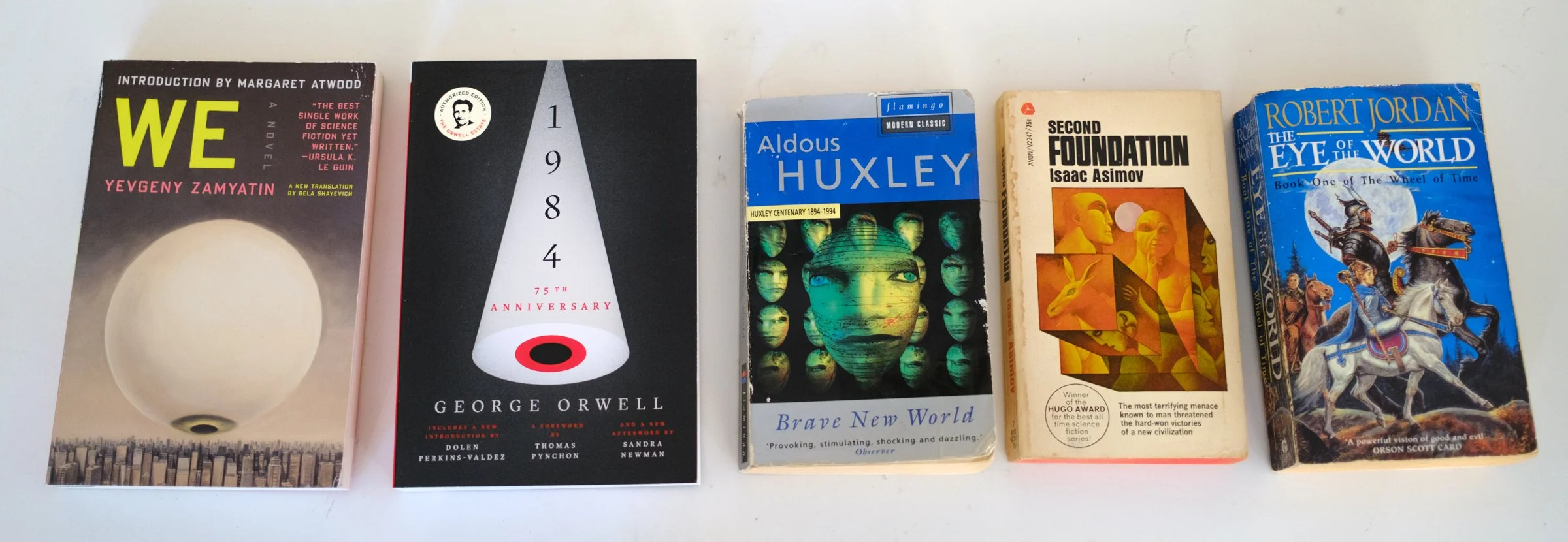
Fascism did not always have a name. The term—derived from the Italian fascio, meaning “bundle”—was formalized in 1919, when Benito Mussolini founded the Fasci Italiani di Combattimento. But the system it describes existed before its christening. Yevgeny Zamyatin’s We (1924) recognized the architecture early: totalitarianism does not require hatred; it thrives on optimization. Citizens become numbers. Privacy becomes inefficiency. Surveillance becomes care. We depicts tyranny not as rage, but as administration—an early blueprint for power that erases humanity through reason rather than cruelty.

1984 (George Orwell, 1949) was not prophecy, but compression. Orwell did not invent the mechanisms he described; he distilled them. Language narrowed into slogans. Truth fragmented into loyalty tests. Fear internalized until enforcement became unnecessary. Power persists not by force alone, but by shaping what can be thought, remembered, and said aloud.

Brave New World (Aldous Huxley, 1932) offered the counterpoint: oppression not through pain, but pleasure. Control through distraction. Through comfort. Through people loving the systems that hollow them out. No boot is required when sedation is sufficient.

Isaac Asimov, often misread as a techno-optimist, was concerned with institutional drift. In the Foundation series (Isaac Asimov, 1951–1953), empires do not fall from rebellion, but from overconfidence. Bureaucracy outpaces ethics. Prediction replaces responsibility. The tragedy is not malice, but administrative inertia. - systems continuing long after their purpose has expired.

The Wheel of Time (Robert Jordan, 1984–2007 Brandon Sanderson, 2009 - 2013) shows how even apocalyptic evil succeeds by co-opting order. The Dark One does not rule chaos. He rules hierarchy, obedience, certainty. His servants do not think themselves villains. They think themselves necessary.

Speculative fiction has never been primarily concerned with monsters.

It has always warned us about structures.

Power Built on Belief

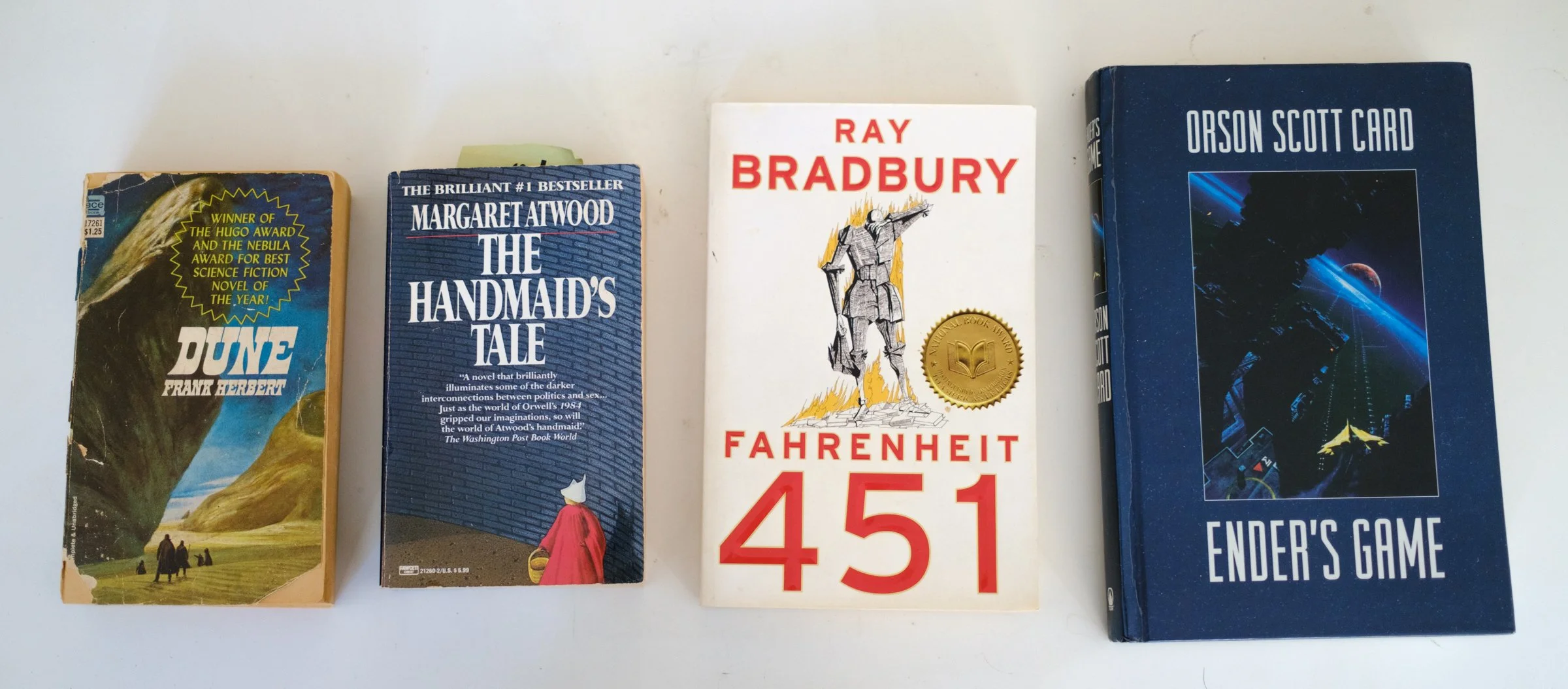
Dune — Frank Herbert, 1965

Dune is not simply a warning about tyranny. It is a warning about longing.

Paul Atreides does not seize power through brute force. He is received by a population desperate for meaning. Prophecy becomes infrastructure. Religion becomes logistics. Once belief replaces consent, violence no longer feels like violence — it feels inevitable.

Herbert’s most unsettling insight is that even a well-intentioned ruler becomes monstrous once the system demands faith rather than accountability.

Fascism here is not hatred first – but destiny.

Bureaucracy as Moral Weapon

The Handmaid’s Tale — Margaret Atwood, 1985

Margaret Atwood understood that authoritarianism rarely invents cruelty. It repurposes it.

Gilead emerges legally. Gradually. Rights are suspended temporarily. Language is moralized. Each step is framed as protection.

The citizens are not ignorant. They are exhausted. Adaptation feels safer than resistance. Compliance feels temporary-

until it isn’t.

Fascism thrives not only on belief,

but on fatigue.

When No One Objects

Fahrenheit 451 — Ray Bradbury, 1953

Bradbury’s firemen burn books not with rage, but routine.

The most terrifying figures are not the enforcers, but the neighbors who do not care. Censorship succeeds when complexity becomes inconvenient. When people prefer comfort to contradiction.

Fascism flourishes when curiosity fades.

Violence Without Proximity

Ender’s Game — Orson Scott Card, 1985

In Ender’s Game, violence is abstracted until responsibility dissolves. Enemies become simulations. Children become instruments. Killing becomes procedural.

Ender is not cruel.

He is effective.

Fascism depends on this abstraction - violence carried out at a distance, sanitized by systems, justified by outcomes.

Andor - The Banality of Empire (and Why It Dresses Better)

Andor — created by Tony Gilroy, 2022

Andor finally understands the Empire not as spectacle, but as administration.

The Empire files reports. Runs prisons efficiently. Speaks in professional language.

It dresses well.

This matters.

Aesthetics are reassurance. Uniforms communicate order. Body armor communicates inevitability. The rebels look desperate. The Empire looks competent.

Advertising agencies understand this. Modern hate movements understand it. Immigration agents cosplay as military. Officials wear tactical gear not for protection, but for messaging.

Fascism performs itself before it enforces itself.

As Mon Mothma names it:

“The loss of an objective reality is perhaps the most dangerous thing.”

When truth collapses, power does not need to lie convincingly.

It only needs to speak the loudest.

Law, Order, and the Architecture of Control

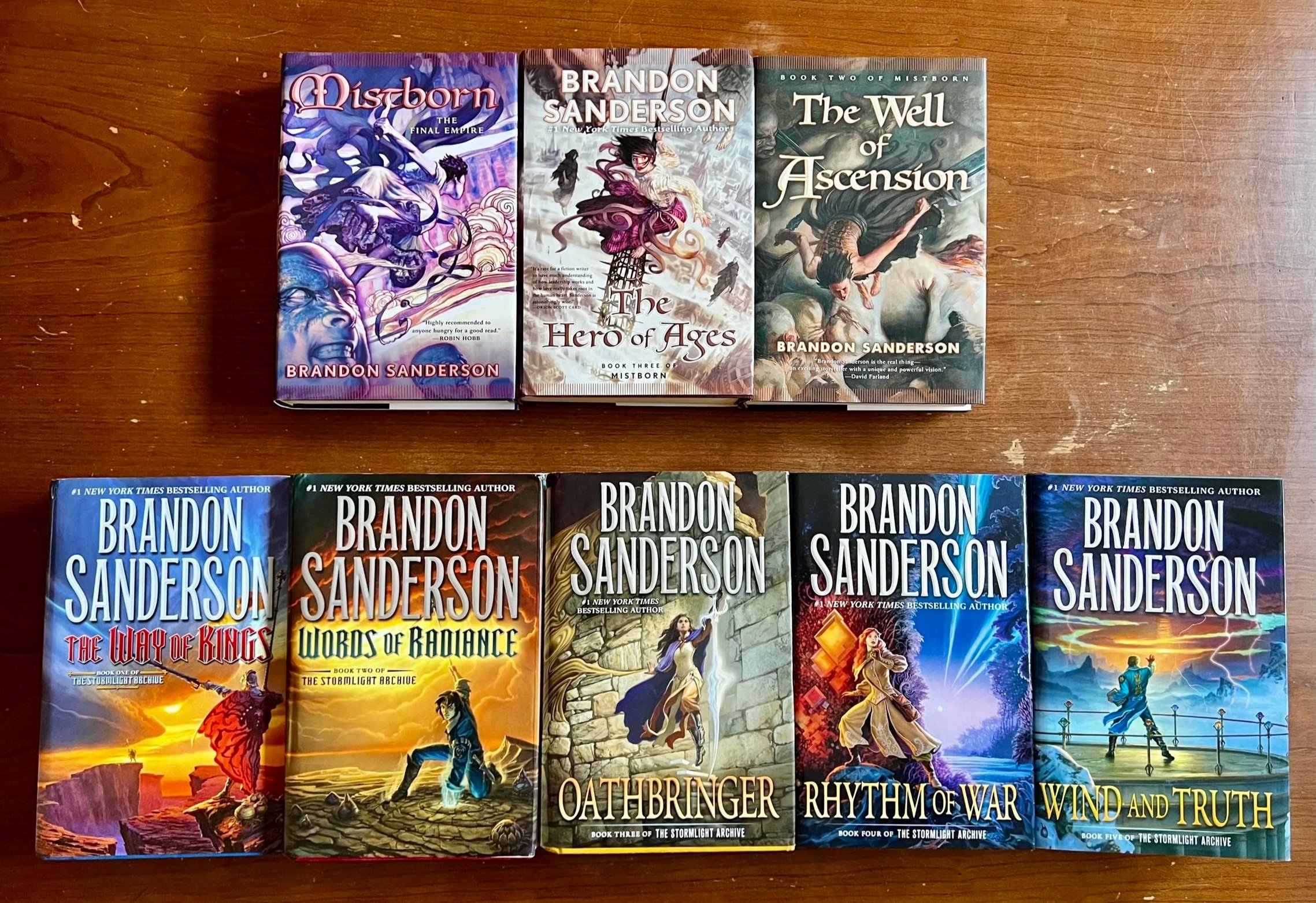
Brandon Sanderson’s work is often misread as morally clean. It is not. It is structural.

Mistborn (Era One) — The Tyranny of Stability

The Lord Ruler is not chaos incarnate. He is a systems administrator. His empire is brutal—but stable. Rebellion is framed as irresponsibility. Suffering is justified by survival.

The most dangerous idea in Mistborn is not oppression—it is the belief that only one system can work.

Even after the tyrant falls, the survivors struggle not to recreate him.

Revolutions inherit habits.

The Stormlight Archive — Moral Complexity Under Pressure

Stormlight’s Radiants are not chosen for purity. They are chosen for fracture.

Dalinar Kholin’s arc is a direct confrontation with fascist logic: the belief that unity excuses atrocity. His journey is not toward power, but restraint. Not toward dominance, but accountability.

Sanderson asks a difficult question:

What happens when honor becomes hierarchy?

When oaths replace ethics?

When unity becomes obedience?

Fascism often begins with the language of virtue.

Inherited Cruelty

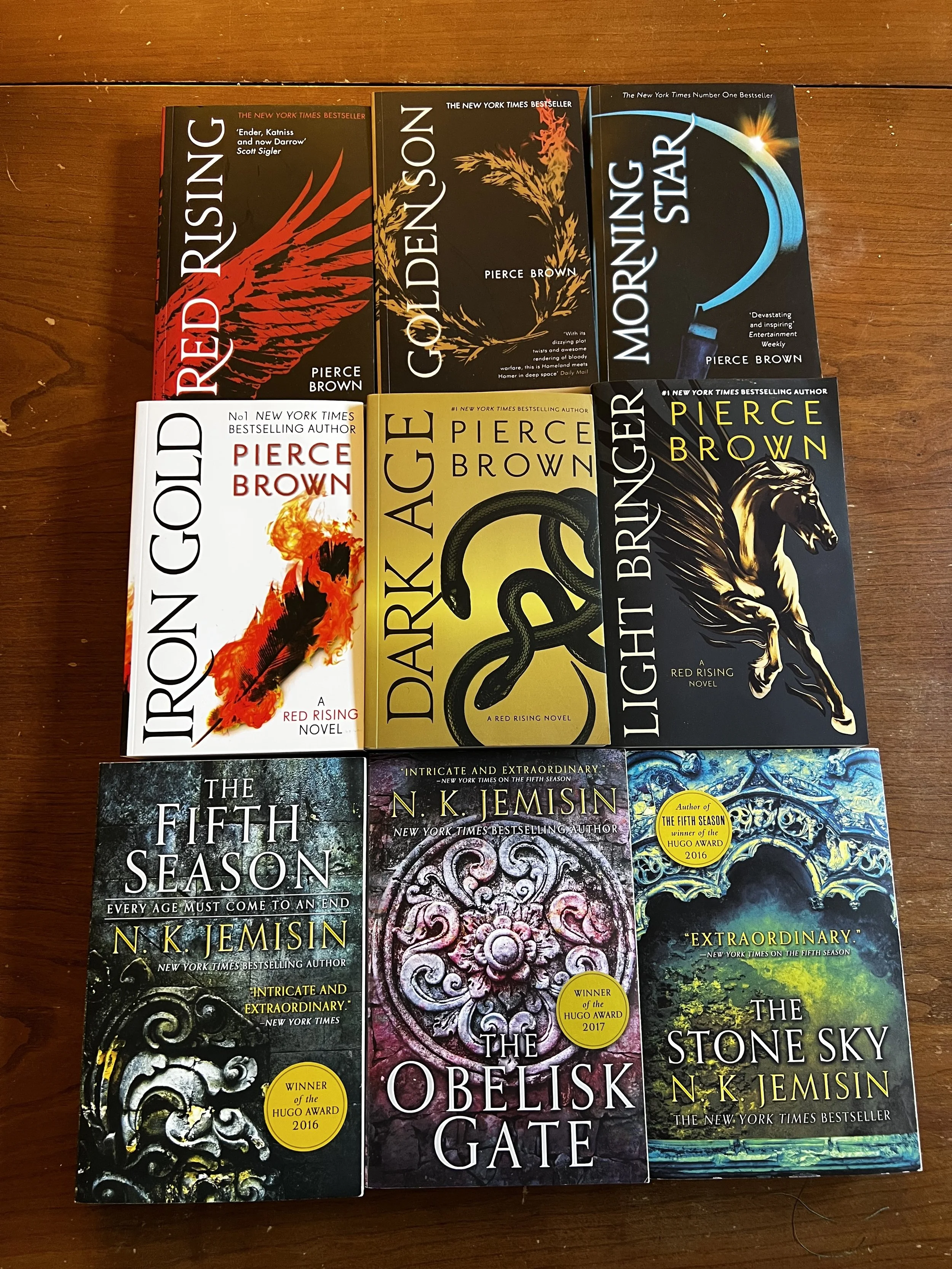
Red Rising — Pierce Brown, 2014
The Broken Earth — N.K. Jemisin, 2015–2017

Red Rising presents fascism as aristocratic theater—hierarchy staged as destiny. Color, caste, and ritual turn inequality into pageantry. What begins as rebellion risks becoming replication. The revolution does not merely fight the system; it absorbs its logic.

The warning is not that revolt fails -

but that power, once seized, retains the muscle memory of what it replaced.

N.K. Jemisin’s Broken Earth goes further. Oppression is not enforced by belief alone—it is embedded into survival itself. Cruelty becomes infrastructure. People participate not because they believe, but because refusal feels fatal.

Fascism here is not spectacle or myth.

It is necessity engineered to look natural.

What Red Rising and The Broken Earth reveal is not how fascism is invented, but how it is inherited.

Once cruelty becomes structural, it no longer needs belief to persist - only memory.

This is where many Japanese speculative works begin.

Fascism, Memory, and the Seduction of Order

Manga & Anime

Japanese speculative fiction often approaches fascism differently than its Western counterparts. Rather than framing authoritarianism as an external seizure of power, manga and anime frequently explore it as something that re-emerges from within society, justified by trauma, catastrophe, and the desire for stability.

These stories are shaped by post-war memory. Nuclear devastation. Occupation. Rapid modernization. The question they ask is not how fascism arrives, but why people accept it again.

Military Authority After the End of the World

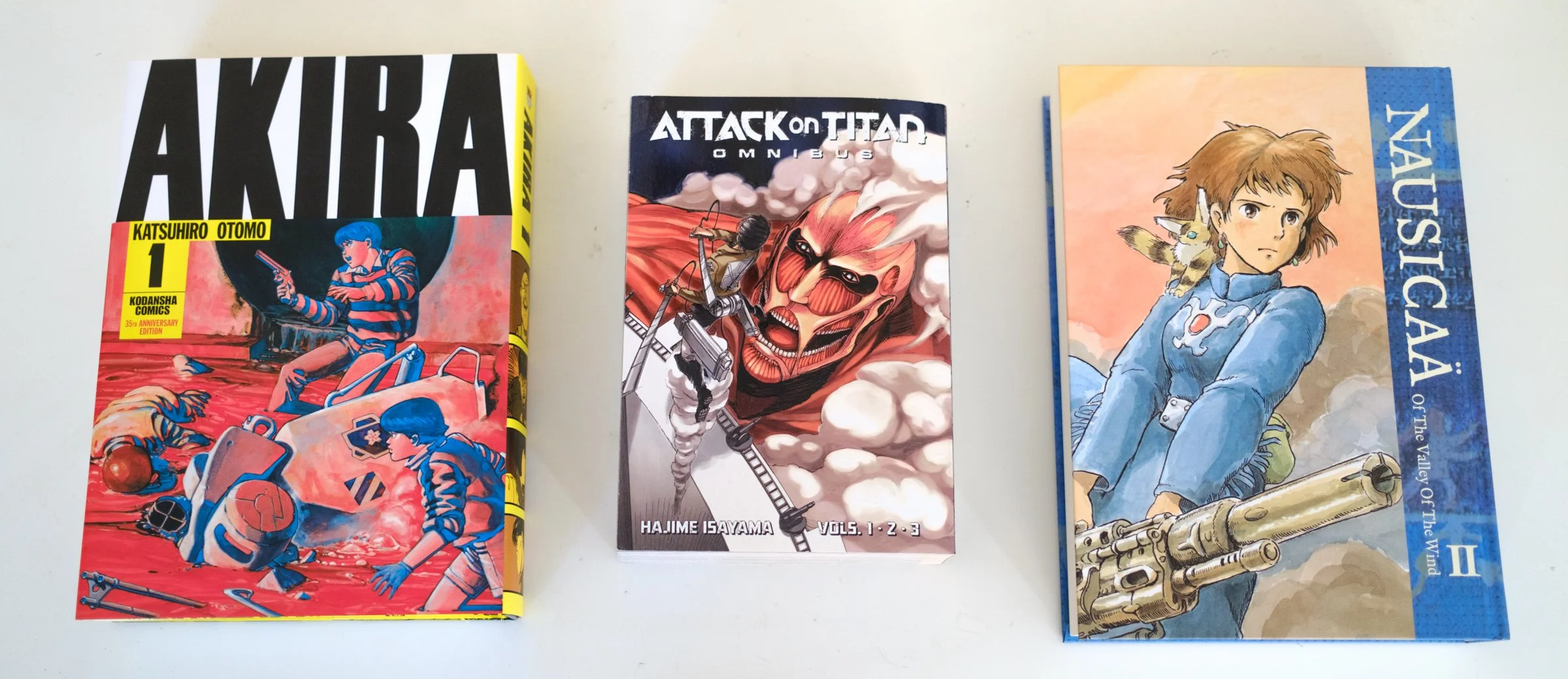
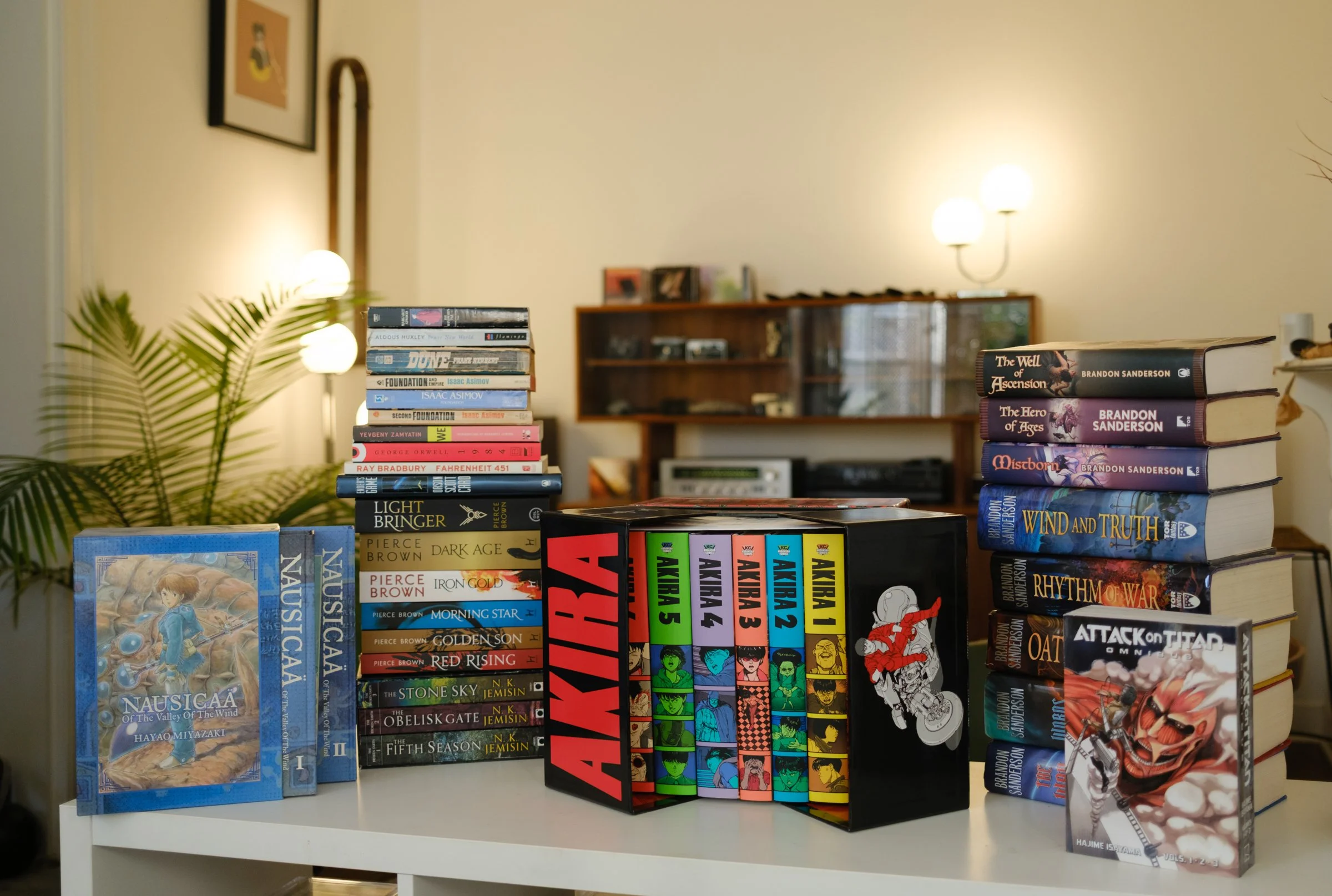
Akira — Katsuhiro Otomo, manga 1982–1990; film 1988

Katsuhiro Otomo’s Akira exists in two essential forms: the manga, sprawling and political, and the anime, compressed and operatic. Both are about fascism, but they approach it from different angles.

In the manga, Neo-Tokyo is governed by a military regime that never relinquished emergency powers after catastrophe. Parliament exists, but it is hollow. Civilian government is performative. Surveillance is constant. Protest is routine—and routinely crushed. Children are experimented on, not out of madness, but bureaucratic necessity.

This is crucial: the state does not justify itself with belief or doctrine. It justifies itself with continuity.

The anime condenses this into visual language: soldiers in riot gear, helicopters sweeping city blocks, psychic children treated as classified assets. Authority is omnipresent, professional, and cold. The military is not villainous in tone.

It is procedural.

Akira understands something deeply unsettling: catastrophe does not radicalize societies toward freedom. It radicalizes them toward control. Emergency powers do not expire.

They normalize.

Fascism here is not fanaticism.

It is permanent crisis management.

Fear as the Engine of Genocide

Attack on Titan — Hajime Isayama, manga 2009–2021; anime 2013–2023

Few modern works examine fascism as nakedly as Attack on Titan, and fewer still implicate the audience so thoroughly.

Both the manga and anime present a society structured entirely around existential fear. The walls are not just fortifications—they are belief structures. They define who is human, who is enemy, and who deserves survival.

Early on, the state’s authoritarianism feels justified. The threat is real. The violence appears necessary. But as the story unfolds, Attack on Titan reveals how fear is cultivated, preserved, and exploited.

History is rewritten. Memory is restricted. Truth becomes classified. Enemies are racialized and dehumanized until extermination feels defensive.

The manga is especially brutal in its clarity: fascism does not require lies—it requires selective truth. Enough honesty to feel grounded. Enough omission to remain obedient.

What makes Attack on Titan so disturbing is that its characters are not caricatures. They are earnest. Afraid. Trying to protect their families.

Genocide is not framed as cruelty.

It is framed as prevention.

That is the warning.

Fascism thrives when survival narratives replace ethical ones.

Power Versus Care

Nausicaä of the Valley of the Wind — Hayao Miyazaki, manga 1982–1994; film 1984

Hayao Miyazaki’s Nausicaä exists again in two essential forms: the film, lyrical and restrained, and the manga, expansive, darker, and more politically complex.

Both are critiques of imperial militarism, but the manga in particular dismantles the governing logic of fascist realism.

Multiple states pursue domination under the guise of survival. Ancient weapons are resurrected. Environmental collapse becomes justification for conquest. Leaders insist there are no alternatives.

This is the language of fascism:

there is no other way.

Nausicaä herself represents a different model of power entirely. She listens. She studies. She refuses simplification. She understands that control destroys what it claims to protect.

What makes Nausicaä vital is that it rejects the core fascist assumption—that compassion is naïve. In Miyazaki’s world, militarism is not strength. It is impatience disguised as necessity.

The manga is especially unforgiving: every empire believes it is acting rationally. Every atrocity is justified. Every collapse is blamed on someone else.

Fascism here is not loud.

It is reasonable.

What Manga and Anime Understand That We Often Miss

Across Akira, Attack on Titan, and Nausicaä, a shared insight emerges:

  • Fascism is born from trauma, not insanity

  • Authority reasserts itself after collapse

  • Fear simplifies ethics

  • Control masquerades as protection

These stories do not depict fascism as foreign or alien. They depict it as a return to form—a familiar structure stepping back into place when uncertainty becomes unbearable.

Where Western fiction often asks Who is the tyrant? Manga and anime ask a harder question:

Why did everyone agree?

That question lingers.

Throughline

Across novels, films, comics, manga, and anime, the pattern remains consistent:

  • Fascism emerges from fear, not madness

  • It is maintained by aesthetics, not just violence

  • It thrives when truth fragments and complexity collapses

  • It recruits ordinary people by offering certainty

Speculative fiction does not dramatize fascism to shock us.

It slows it down so we can see how easily we would participate.

Fascism does not begin with camps.

That is a byproduct.

It begins with simplification.

With language narrowing.

With truth fragmenting.

With aesthetics replacing ethics.

With people choosing order over justice.

Speculative fiction does not ask “What if this happened?”

It documents how often it already has.

Fascism is not a monster at the gate.

It is a mirror—

polished

until participation feels like normalcy

and recognition arrives too late.

Reading as Orientation: How Speculative Fiction Shapes Thinking and Choice by matt freire

My 2025 reflections on 42 science fiction, fantasy, and speculative works exploring systems, consequences, and the moral frameworks that shape thought and action.

I don’t read books for escape. I read them for orientation. I wander to find my bearings.

Experience teaches you that events rarely speak for themselves. Meaning emerges through framing, context, scale, and what endures after the moment has passed. Speculative fiction has always helped me see those structures more clearly. By bending reality just enough, it exposes the systems underneath.

In 2025, I spent most of my reading life immersed in speculative fiction — science fiction, fantasy, sword and sorcery, and mythic narratives that function less as entertainment and more as tools for thinking.

This isn’t everything I read, but it’s the arena I returned to most often.

Some of these books I read in physical form. Some I listened to. Others, I moved between text and audio, sometimes at the same time. Dyslexia complicated reading early in my life; narration isn’t a shortcut — it’s an access point. A strong performance doesn’t just transmit story. It reveals rhythm, intention, and emotional weight that can otherwise stay buried.

By the numbers: 42 books, ~18,000 pages, ~7.6 million words.

Not the count, but the focus, that mattered.

Why Speculative Fiction

Like all nerds, we must defend! Speculative fiction strips reality down to its load‑bearing elements, exposing the structures that shape thought, choice, and consequence.

Remove familiar geography, contemporary names, and inherited assumptions, and what remains are structures: power, belief, obedience, memory, myth... Fantasy and science fiction make visible what realism often leaves implicit. Empires have edges. Hierarchies are formalized. Consequences echo across generations.

Sword and sorcery, at its best, reduces morality to consequence: what power costs, who pays, and what remains afterward.

These genres don’t simplify the world. They widen the reader’s lens. They slow judgment and sharpen perception. They change scale — and scale changes meaning.

The Shape of the Year

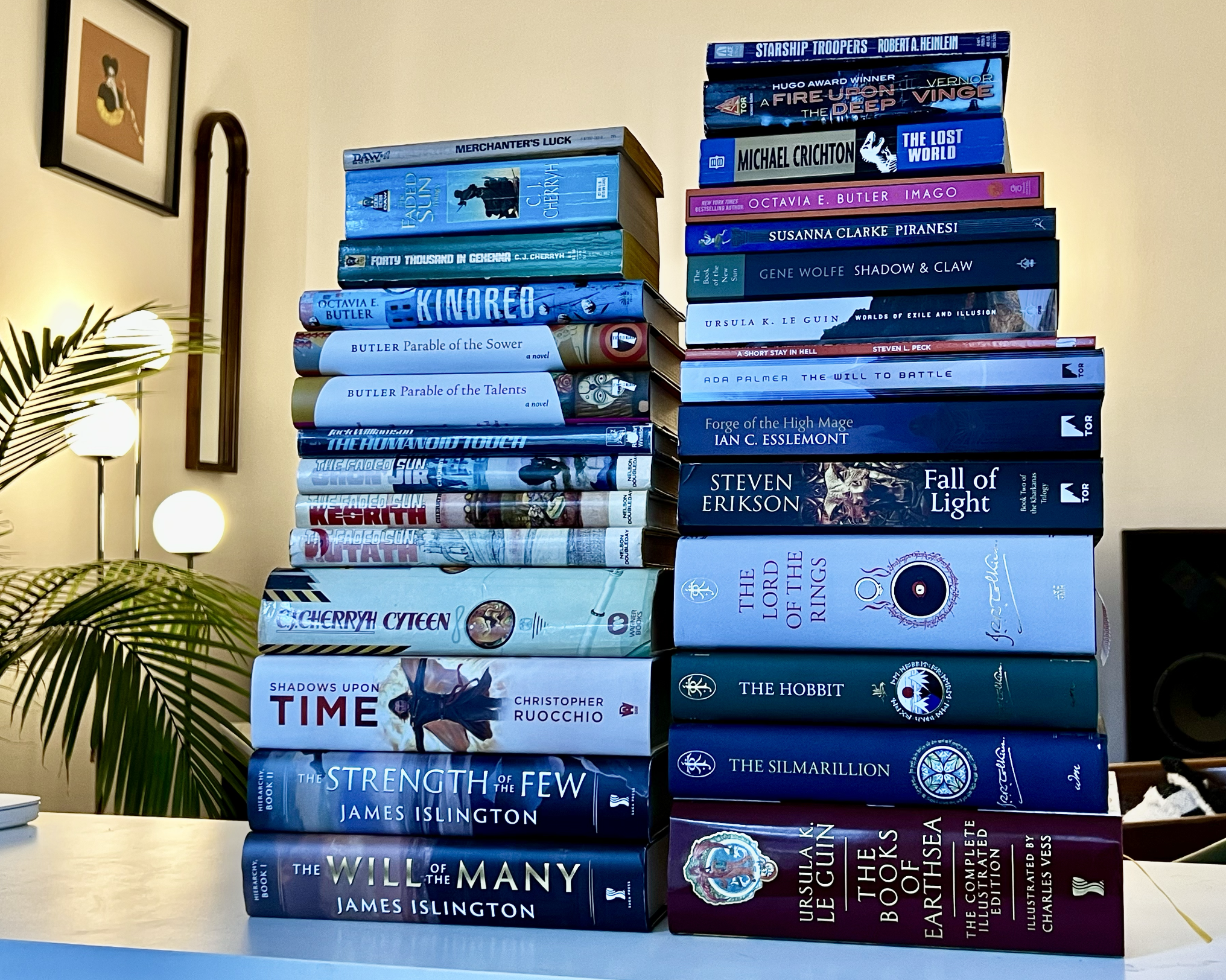
Across decades and subgenres — from Jack Williamson’s The Humanoid Touch to Ada Palmer’s Terra Ignota, from Tolkien’s mythic histories to Butler’s near‑future collapse — the same questions kept resurfacing:

  • How do systems shape behavior before choice feels possible?

  • What happens to ethics when scale outpaces intimacy?

  • When does obedience harden into abdication?

  • How do people construct meaning without guarantees?

This wasn’t a year of triumph narratives. It was a year of aftermath, memory, and consequence.

Systems, Not Heroes

Many of the books that anchored the year are deeply skeptical of individual heroism.

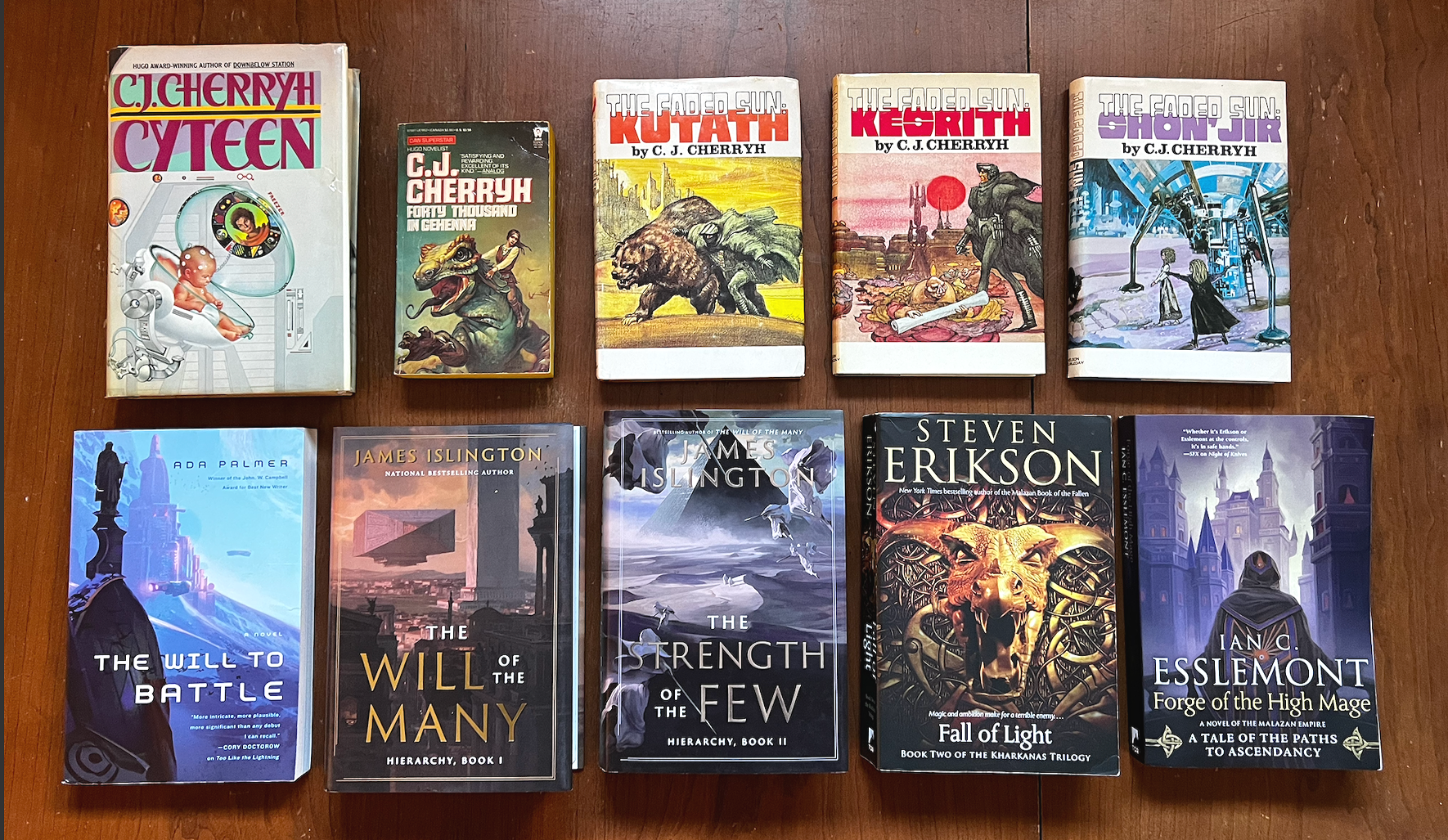
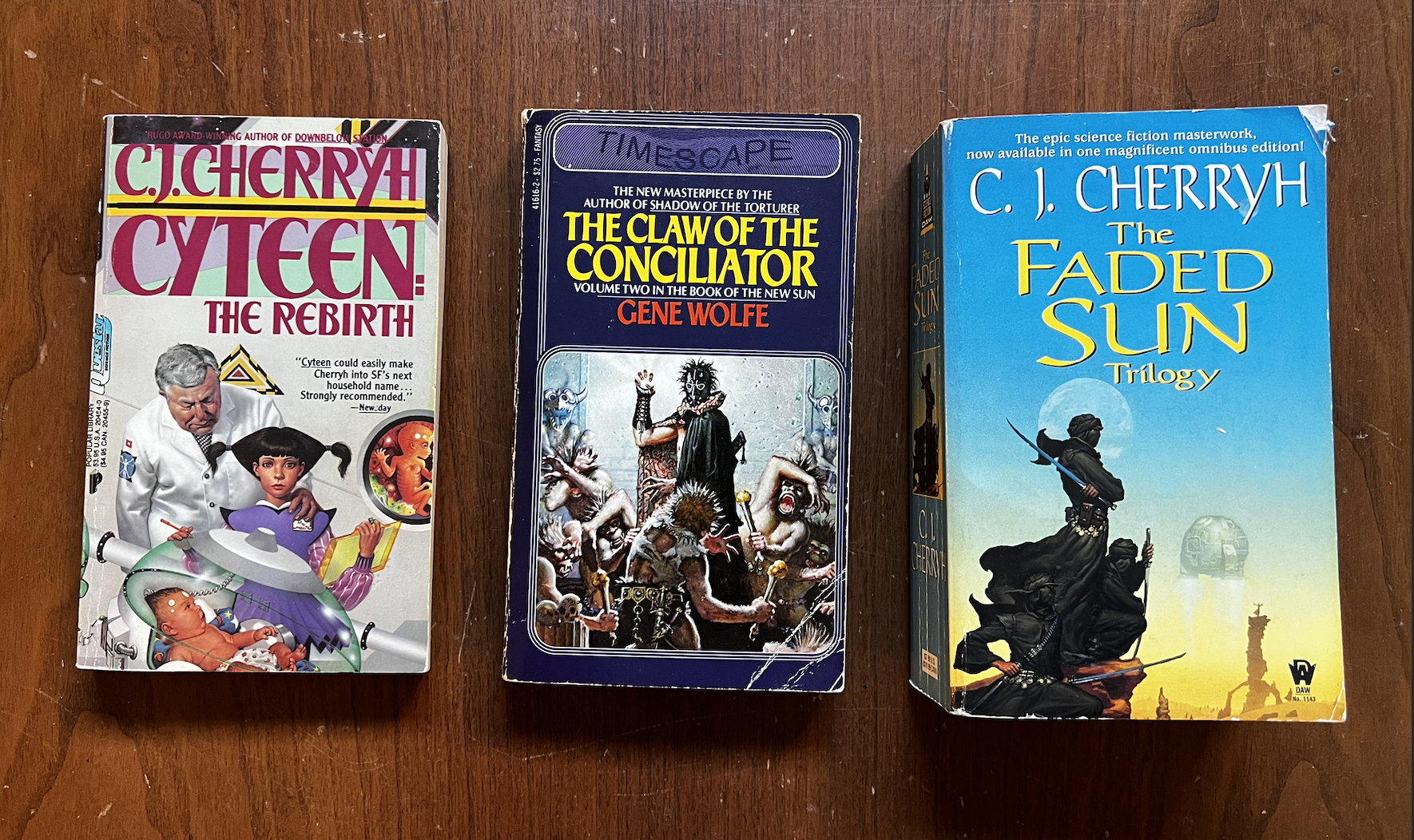
C.J. Cherryh’s Cyteen is one of the most intellectually rigorous novels I’ve read. Identity, loyalty, and consent are revealed as artifacts of institutional design — no villain is required; the system itself produces consequence and operates as indended. Events from Forty Thousand in Gehenna echo throughout Cyteen, providing both context and moral contrast, showing how decisions compound across generations and how societal structures shape behavior. Reading Forty Thousand in Gehenna after Cyteen was essential: it illuminates the consequences that Cyteen examines in theory, making the stakes of political manipulation, social engineering, and cultural drift visceral. The Faded Sun Trilogy (Kesrith, Shon’jir, Kutath) extends these themes across alien societies, where honor becomes a survival language and misunderstanding fossilizes into tradition. The Faded Sun begins in conversation with Dune but quickly moves into its own lane: dry, stark, and anti‑epic.

Ada Palmer’s The Will to Battle imagines governance without shared moral ground, where ideology fractures under scale and politics becomes procedural rather than ethical. Laws, rituals, and bureaucracies persist even as underlying justice dissolves, showing how societies can operate efficiently while remaining morally unmoored. James Islington’s The Will of the Many and The Strength of the Few explore similar terrain, depicting societies built on extracted obedience, where sacrifice is normalized and dissent carries structural penalties. Both authors probe the tension between individual agency and systemic constraint, revealing how power, ideology, and ritual shape behavior and consequence.

Steven Erikson’s Fall of Light and Ian C. Esslemont’s Forge of the High Mage trace the slow petrification of myth, ritual, and sanctioned violence into law, doctrine, and unquestioned authority. Across the twenty-five, twenty-six volumes of Malazan: Book of the Fallen, acts born of pragmatism fossilize into tradition; gestures meant to solve immediate problems ossify into creeds that govern belief, behavior, and power. Violence morph with law, ritual weaves into hierarchy, repetition alone spawn authority, indifferent to ethics or mercy.

To read the series in full is to feel the cumulative weight of memory, consequence, and systemic logic pressing against the spine. The world is vast, intricate, and brutal. Patterns surface; small choices echo across centuries and its famously extensive dramatis personae (Latin, literally ‘persons of the drama’). The machinery of society grinds forward, often cruelly, always inexorably.

I petition all readers: bear witness. Malazan is a masterclass in the human cost of enduring systems, reshaping how we perceive complexity, scale, and moral consequence — not only in fantasy, but across all speculative worlds.

These books share a fundamental insight: systems don’t need malice to produce harm. They need time, continuity, and participation.

Unreliable Narrators and Limited Truth

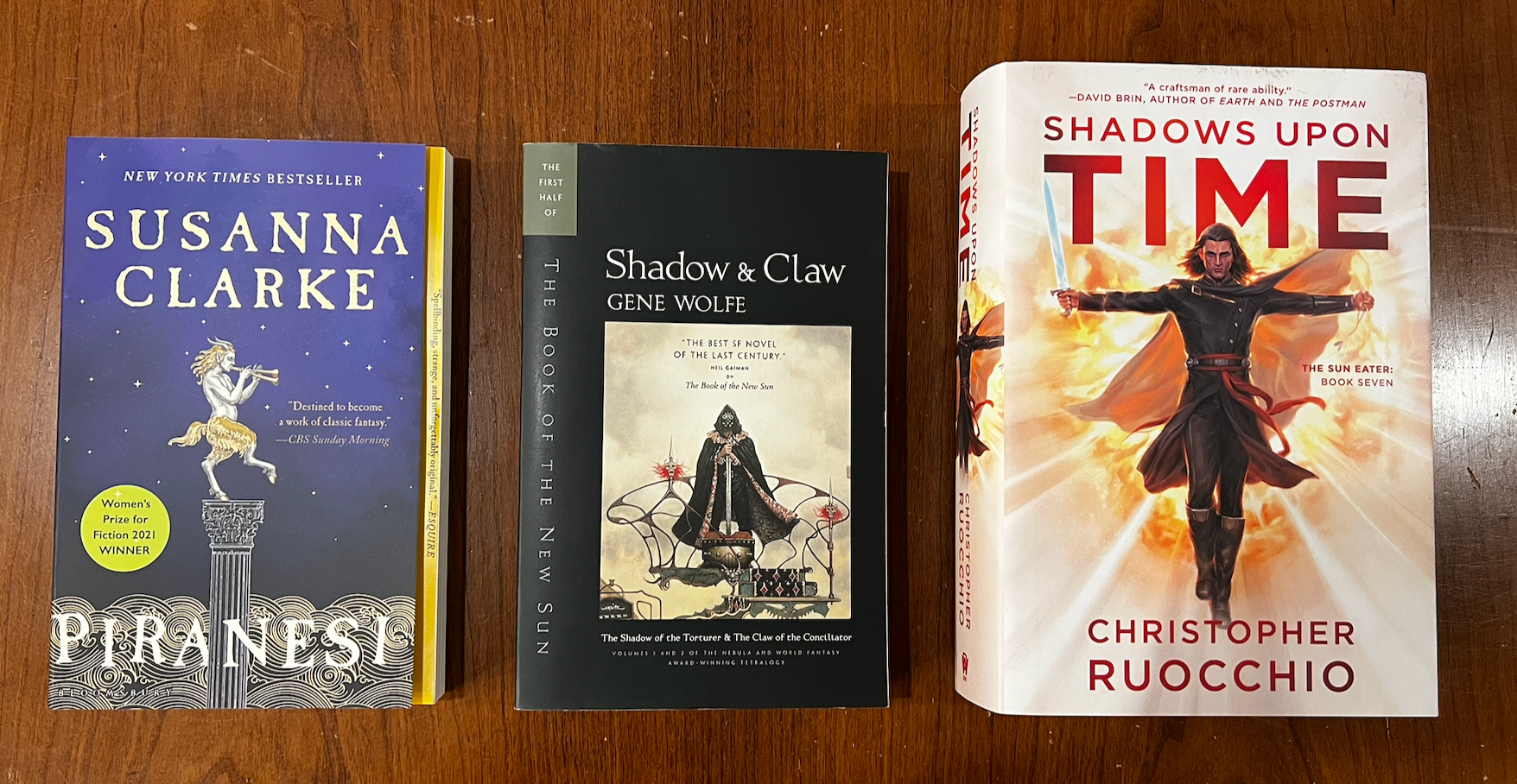
Many of the my favorite reads this year are told through fractured or constrained perspectives. Piranesi was one of these stories, and the one I gifted the most. The narrator isn’t so much unreliable as constrained, navigating a world that limits knowledge, memory, and perspective. What is lost in recollection is regained through attention, ritual, and care — the small acts that give life structure and significance. Gentleness becomes adaptation, and curiosity becomes survival. Clarke’s prose transforms a solitary, meditative story into a reflection on resilience, the persistence of understanding, and how humans create coherence even when reality refuses to provide it. The work underscores a central insight of speculative fiction: that structure and understanding — whether in labyrinthine halls or across galaxies — are human inventions, forged through care, ritual, and persistence.

Gene Wolfe’s Shadow & Claw demands patience. If you’ve tried to read it you know. Language obscures as much as it reveals, and the story rewards careful attention. Truth dissolves not through deception, but through ritual, forgetting, and the imperatives of survival. Wolfe constructs a world where memory, perspective, and interpretation are as much a part of the narrative architecture as plot. Where understanding is earned, often slowly, through reflection and engagement with the text’s layered complexities.

Shadow Upon Time arrives when remembrance is no longer a gift but a weight. As the final tome of Christopher Ruocchio’s Sun Eater, understanding does not precede consequence — it trails it, creeping in only after history has carved its mark. Where lesser stories lean on deus ex machina (Latin for “god from the machine”), here divine intervention, religion, and myth feel earned, woven into consequence rather than convenience. Sun Eater is not grand for scale alone, Reader; it is grave because it teaches that meaning comes after harm, never before.

Across these works, objectivity matters less than coherence. The self doesn’t need to be accurate to endure — it needs to be livable.

Adaptation, Change, and Prescience

Octavia Butler sits at the philosophical center of this reading year.

In Parable of the Sower, belief evolves because it must. God is Change, not comfort but discipline. Parable of the Talents shows how belief hardens under pressure, how faith becomes an institution rather than a refuge. Butler in 1998 gives her authoritarian demagogue the slogan “Make America Great Again,” and the force of the moment is not the words themselves, but the structure behind them. She understands how nostalgia becomes governance, how fear reorganizes institutions, and how violence is reframed as moral restoration.

Kindred collapses time to show that history lives not in archives but in bodies. Trauma is inherited, reenacted, and normalized through survival. Dana’s repeated returns are not lessons learned but injuries endured; knowledge offers no immunity. The novel refuses distance. The past is not past—it asserts itself through flesh, through power dynamics that persist even when recognized.

Imago closes Xenogenesis by refusing nostalgia altogether. The trilogy begins with survival and negotiation; it ends with irreversible change. Consent is renegotiated, humanity is no longer centered as the default measure of value, and continuity gives way to divergence. The future Butler imagines is neither conquest nor extinction, but change so complete that return is impossible. What survives is not purity, but adaptability.

Butler does not console.
She clarifies.

Myth, Memory, and Voice

In The Silmarillion, Tolkien treats myth as moral technology. Creation begins as gift and gradually collapses into possession, control, and obsession. Loss accumulates slowly, across ages, until it feels not sudden but inevitable. Power is rarely seized outright; it is inherited, misused, and rationalized over time.

Andy Serkis’s narration brings an emotional clarity and physicality that make these ancient stories feel less distant and more lived-in. Even though I read The Hobbit and The Lord of the Rings last year, experiencing Serkis’s narration of The Silmarillion made staying in Middle-earth feel essential. His command of cadence, character, and restraint is a reminder that voice shapes meaning, especially in dense or mythic prose. In Tolkien’s work, narration becomes a form of interpretation, revealing how myth survives not just through text, but through performance, memory, and retelling.

Ursula K. Le Guin’s Earthsea cycle (A Wizard of Earthsea, The Tombs of Atuan, The Farthest Shore) provides a counterpoint to the scale-driven epics elsewhere in my reading. Through restraint, balance, and acceptance of limits, Le Guin shows that wisdom often comes not from conquest or accumulation of power, but from understanding one’s place within a system. Her Hainish novels — Rocannon’s World, Planet of Exile, and City of Illusions — examine how myth, cultural misunderstanding, and incomplete knowledge shape destiny across generations. In both cycles, she demonstrates that the consequences of actions extend beyond the individual, that societal structures and inherited narratives profoundly influence behavior, and that survival and ethical clarity require attentiveness to context, history, and perspective.

History, these books suggest, endures not as record, but as story, carried forward through memory, myth, and the choices of those who live it.

Violence, Authority, and Scale

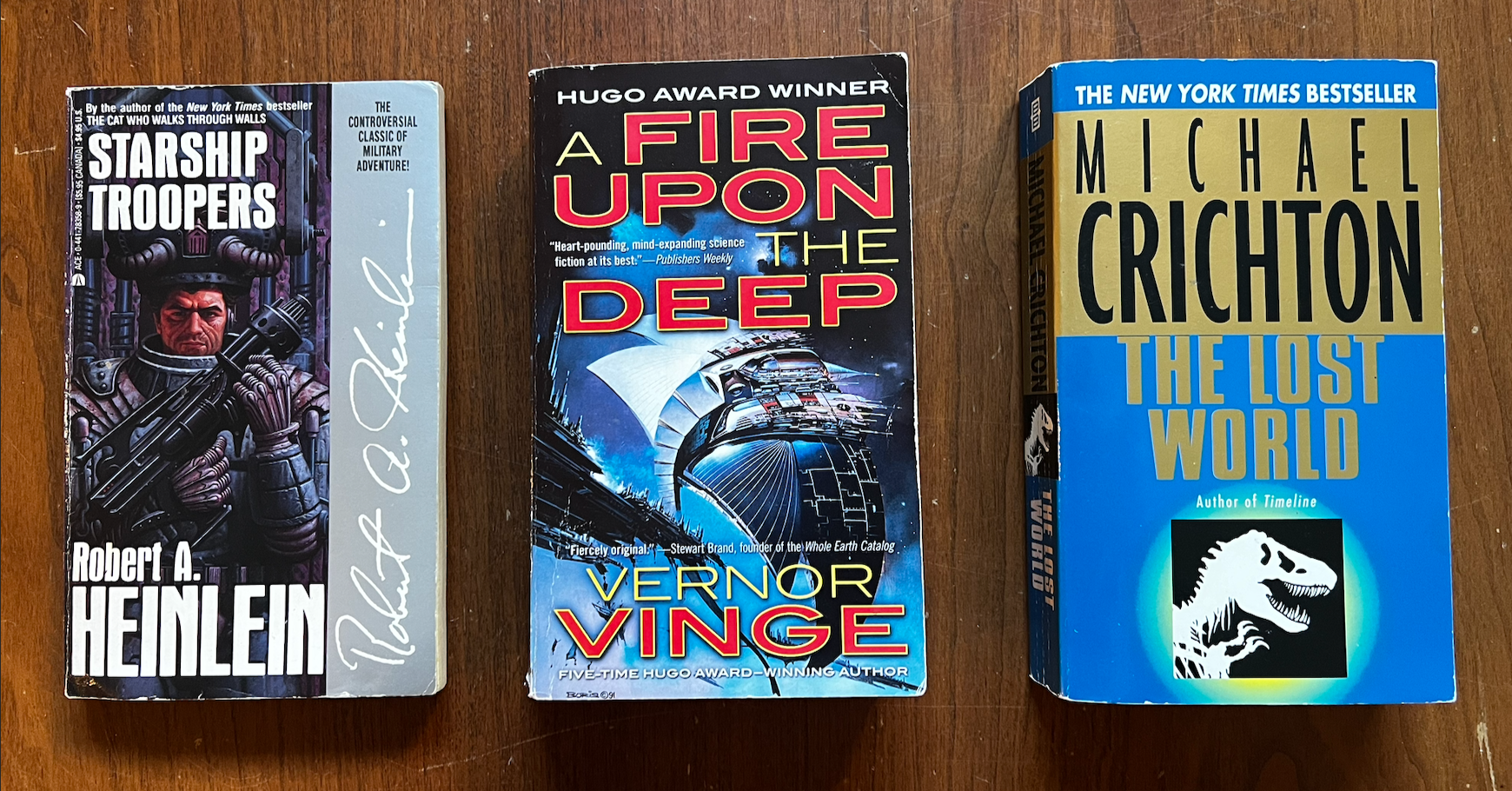
Robert Heinlein’s Starship Troopers asks whether discipline and violence can be morally formative, whether civic virtue can grow through obedience and shared sacrifice. I watched this a dozen times on my first military deployment. “I need a corporal. You're it, until you're dead or I find someone better.” The book is quieter, more precise, asking: can structured duty and exposure to controlled violence teach ethical clarity, or does it simply normalize conformity and numb the individual? Read alongside Butler, Palmer, and Cherryh, the question doesn’t resolve; it deepens. In Cyteen, loyalty and identity are engineered; in Terra Ignota, ideology fractures under scale; in Butler’s Parable series, ethics are a daily negotiation. Discipline and duty are not inherently virtuous; their meaning depends on context, scale, and the consequences of obeying flawed or indifferent systems.

Michael Crichton’s The Lost World and Vernor Vinge’s A Fire Upon the Deep explore intelligence without wisdom and scale without restraint. Progress accelerates collapse when ethics lag behind capability. Crichton’s world collapses under human hubris, showing the cascading cost of choices made without foresight. Vinge imagines a galaxy divided into zones of thought — where intelligence and technology ebb and swell under cosmic law — reminding us that knowledge, power, and ethics are never separate, and consequences are magnified across civilizations.

Ryan Cahill’s The Bound and the BrokenOf Blood and Fire, Of Darkness and Light, Of War and Ruin, Of Empires and Dust, along with The Fall, The Exile, and The Ice — refuses tidy victories. War does not end; it reshapes suffering, leaving trauma as a persistent force that molds choice, character, and society. Of War and Ruin and Of Empires and Dust together articulate the cost of power with rare emotional clarity. I love taking long walks while listening to epic fantasy, and this series delivers it at its fullest: dragons, magic, sword and sorcery, lore, and fully realized worlds. Derek Perkins’s narration mirrors the story’s weight and scope, carrying the listener through victories, defeats, and the quiet aftermath.

These works remind me that the stakes of power, obedience, and violence are never abstract. Across battlefields, alien civilizations, and sprawling interstellar societies, every choice reverberates through lives and systems. Scale amplifies consequence, and morality is forged not in isolation but in the friction between duty, systems, and the human cost of action. These are the books that make me consider not just the story, but the architecture of consequence itself.

Small Books, Heavy Gravity

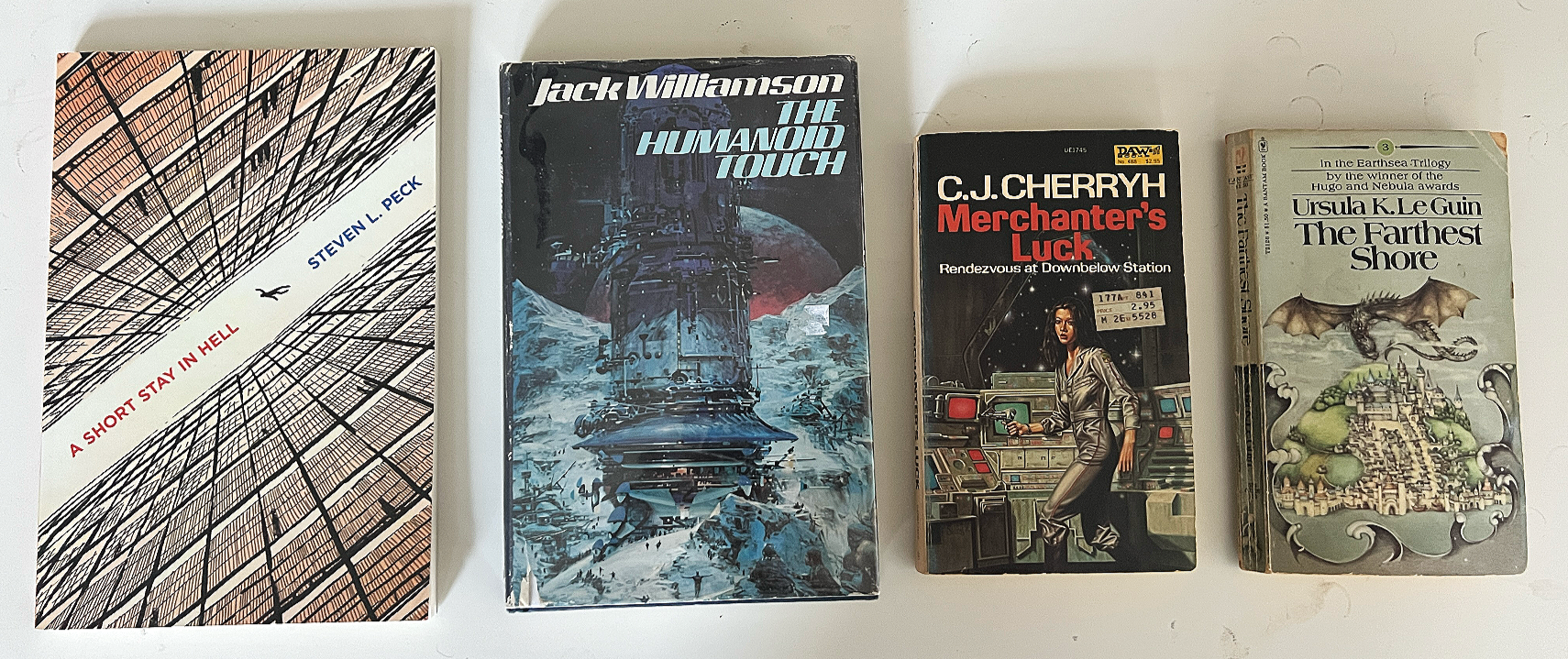
A Short Stay in Hell is brief, but immense. It uses scale to erode meaning, forcing purpose to be chosen without rescue. The Humanoid Touch questions whether humanity is defined by empathy, intention, or behavior, exploring the subtle ways we fail or sustain one another. Merchant’s Luck examines agency under asymmetrical power, showing how survival is rarely a matter of fairness but of navigating complex, unequal systems. The Farthest Shore confronts entropy and the limits of magic without spectacle, a meditation on endings and the moral weight of intervention.

These books linger not because they resolve their conflicts, but because they refuse to, demanding that the reader inhabit uncertainty and consider the consequences that ripple beyond the story.

The Physical Object

The cover art drew me into speculative fiction. Beyond the physical object, aesthetics, architecture, mood, technology, weapons, creatures, symbols, and environments often speak as powerfully as plot or theme. For me, design works in two distinct but connected directions.

First, the physical book itself. Cover art, typography, layout, paper, binding, and even the title shape expectations before a word is read. At its best, a book becomes an artifact — meant to be handled, revisited, and kept — reinforcing the weight and permanence of the ideas inside. At its worst, generic design can undersell complexity, creating dissonance between presentation and substance.

Second, the worlds themselves. From the ritual-bound halls of Earthsea to the institutional architecture of Cyteen, the collapsing suburbs of Parable of the Sower, or the infinite spaces of Piranesi, environments are suggested, not exhaustively rendered. Great authors give just enough for the reader to construct their own vision. That restraint invites participation: the author provides structure, the reader supplies texture, memory, and meaning. When it succeeds, the world feels lived-in, discovered rather than explained.

Story, Character, and Growth

Speculative fiction is often measured in terms of scale - worlds, systems, big ideas. What’s easier to miss is how easily that scale can eclipse the personal. The books that stayed with me resist that imbalance. They use the macro not to replace interior life, but to test it.

In Piranesi, growth is not accumulation but integration. The protagonist becomes someone new —neither who they were nor who they are — learning to live with knowledge that cannot restore what was lost. In Cyteen, character is inseparable from design. Identity is shaped, constrained, and reproduced, raising the unsettling question of whether growth is possible inside systems that engineer desire, memory, and loyalty. In Kindred, growth is brutal and embodied. History does not educate from a distance; it marks the body, reshapes relationships, and makes survival morally expensive.

Even within epic frameworks — The Bound and the Broken, Sun Eater, Malazangrowth is not measured by power gained, but by what characters are forced to endure, relinquish, or carry forward. Trauma does not resolve cleanly. Moral clarity arrives late, if at all. The best parts of coming-of-age tales are less about triumph and more about learning what cannot be fixed and choosing how to live anyway.

These stories suggest that speculative fiction’s deepest work is not prediction, but orientation. They map how people change under pressure — ideological, cosmic, institutional, or historical — and ask what remains when certainty collapses. Growth here is not comfort. It is adaptation, responsibility, and the slow construction of meaning under constraint.

Best of the Shelves

Piranesi, Cyteen, Shadow Upon Time, Of War and Ruin / Of Empires and Dust

My favorite stories this year share a refusal to rescue the reader.

Hope, here, isn’t optimism.

It’s discipline.

This year’s reading was more clarifying than comforting.

Reading didn’t make the world simpler.

It made it legible.

And that feels like the point.